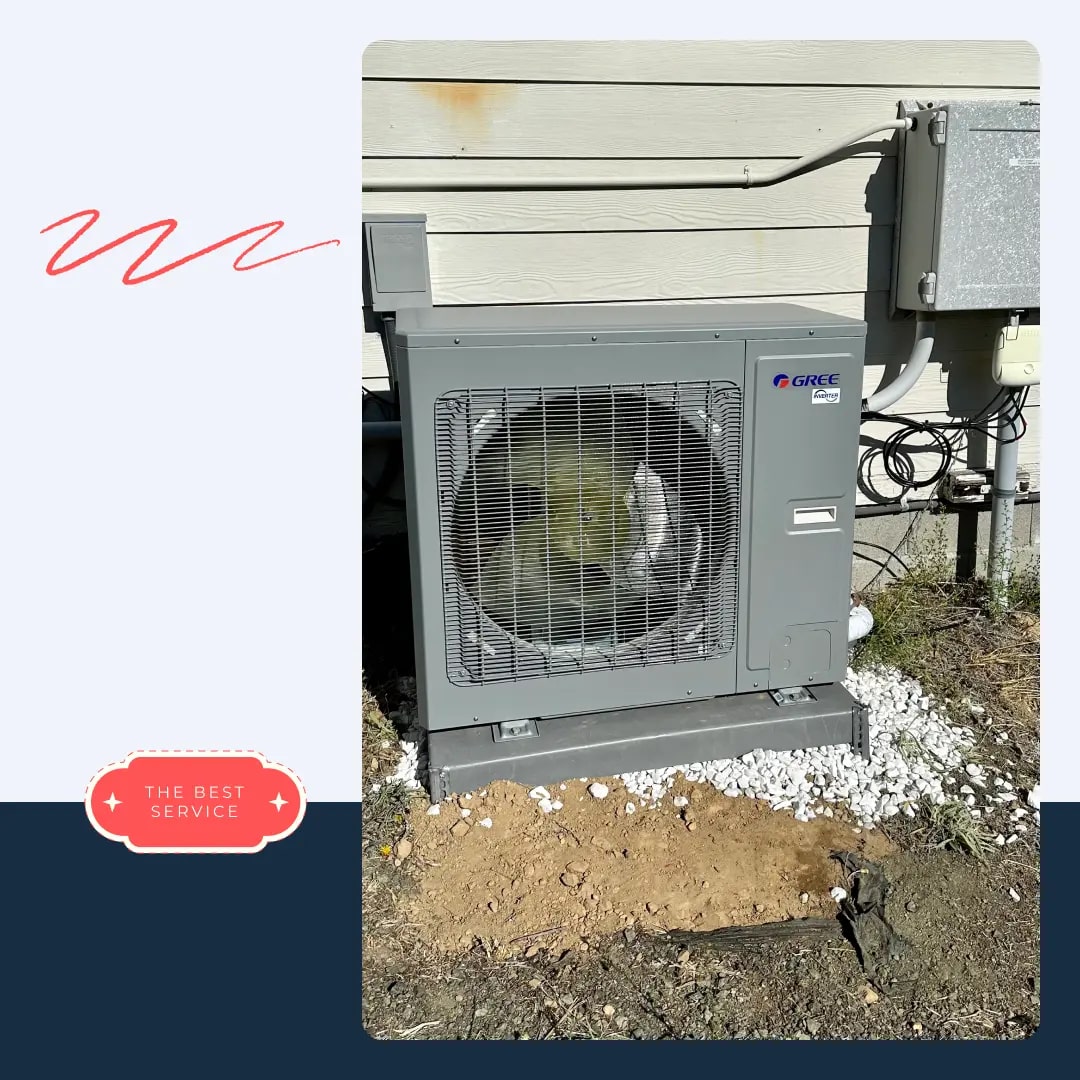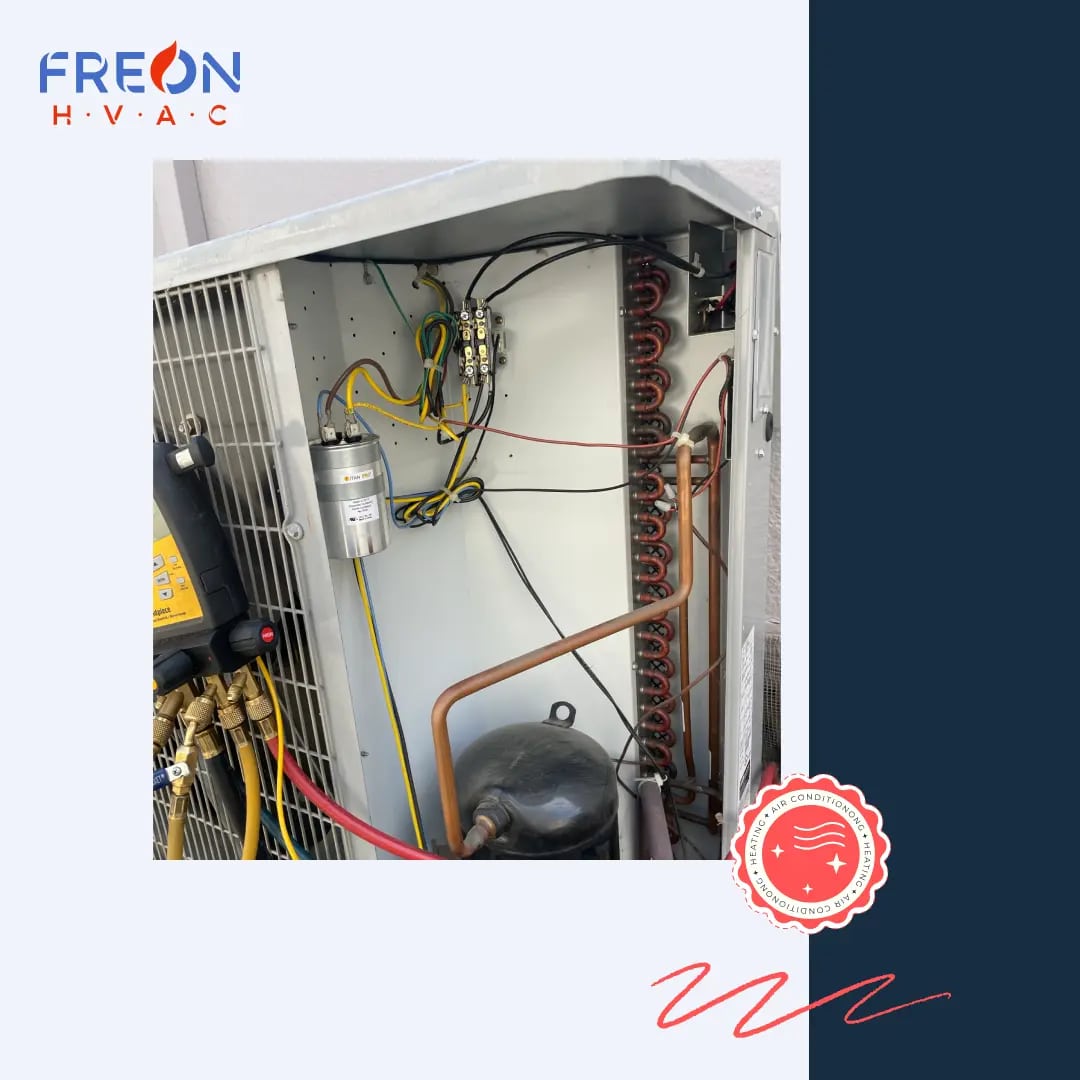
Best Goodman Furnace Installers and Their Impact on Your Device’s Efficiency and Lifespan

Author: Sergey SEO Administrator

Best Goodman Furnace Installers and Their Impact on Your Device’s Efficiency and Lifespan

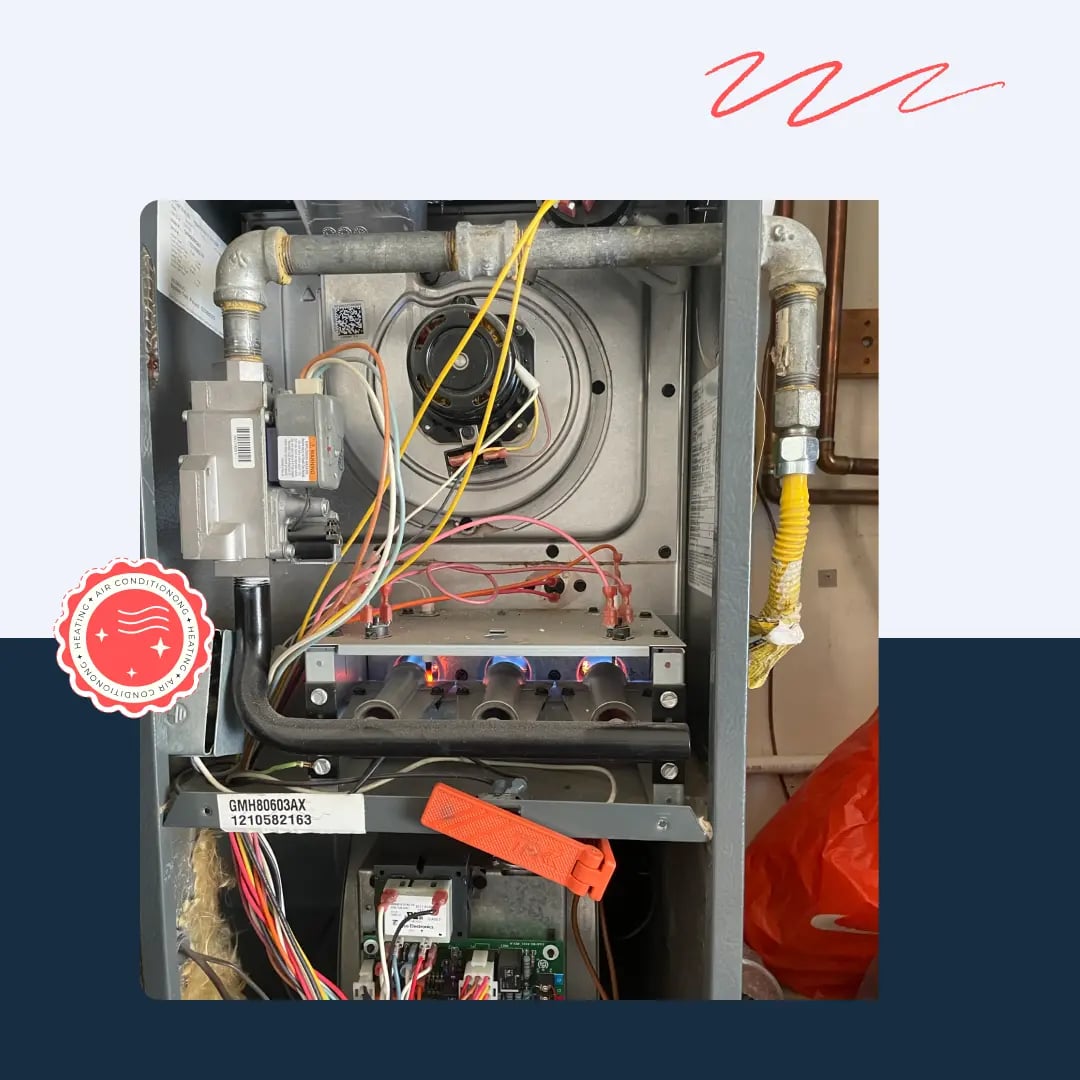
Honestly, this brand of furnace is a solid piece of equipment. But here at Freon Service, we know firsthand that even the best tech will perform poorly if it’s installed wrong. That’s why the whole process is really a science. In this article, we’ll take you behind the scenes and show what it actually looks like.

Approaches from the Best Goodman Furnace Installers

Chances are, you’d agree it’s not just about hooking it up to the gas line and flipping a switch. To make everything run like clockwork, here’s what we do:

1. First, we calculate the needed capacity

Yes, it sounds boring, but it’s super important.

  • If the furnace is too big — it will fire up for a couple of minutes and shut off, and your gas bill will shoot up numbers that could scare even a platinum credit card.
  • If it’s too small — it will run all day long, and you’ll still be cold.

2. We check everything we install

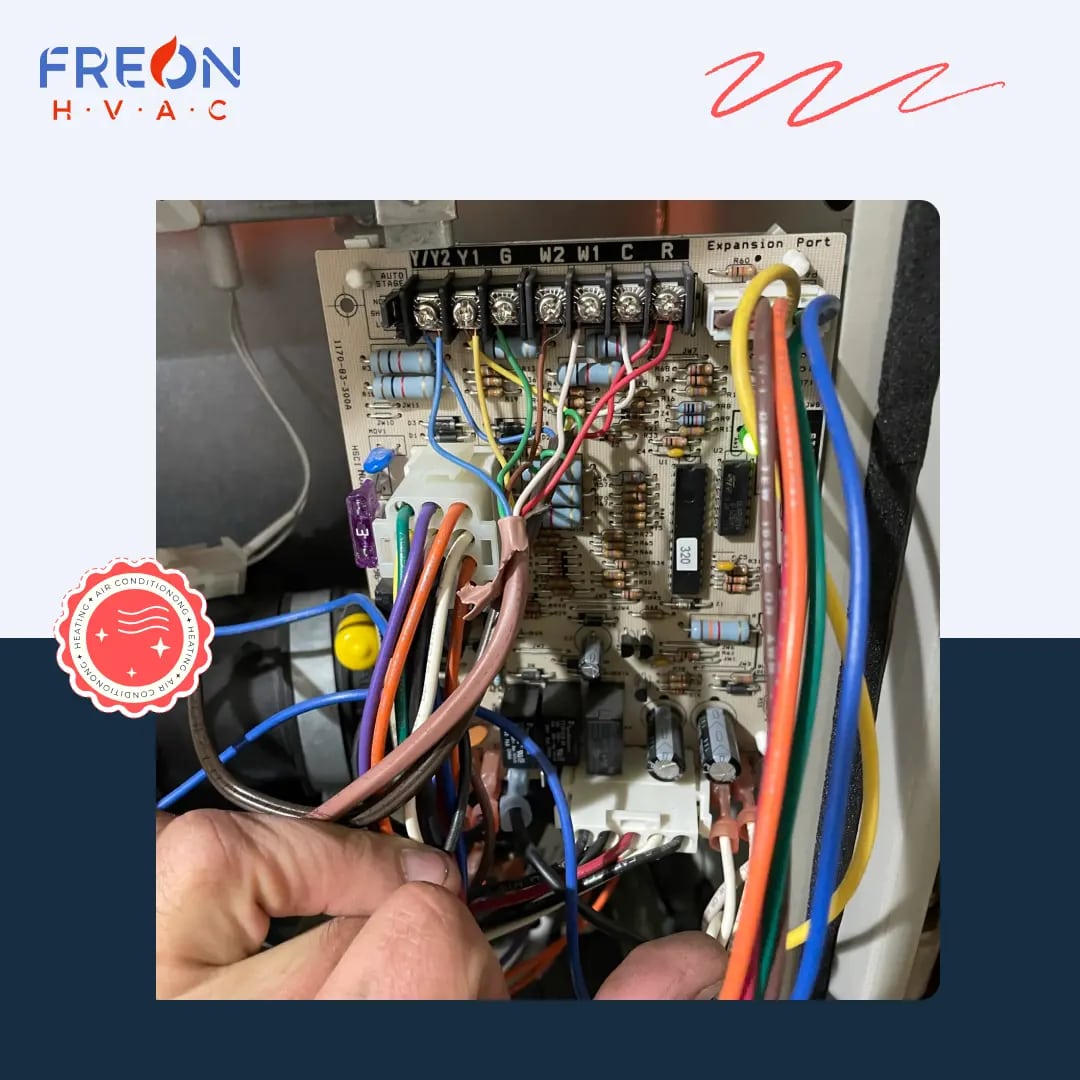
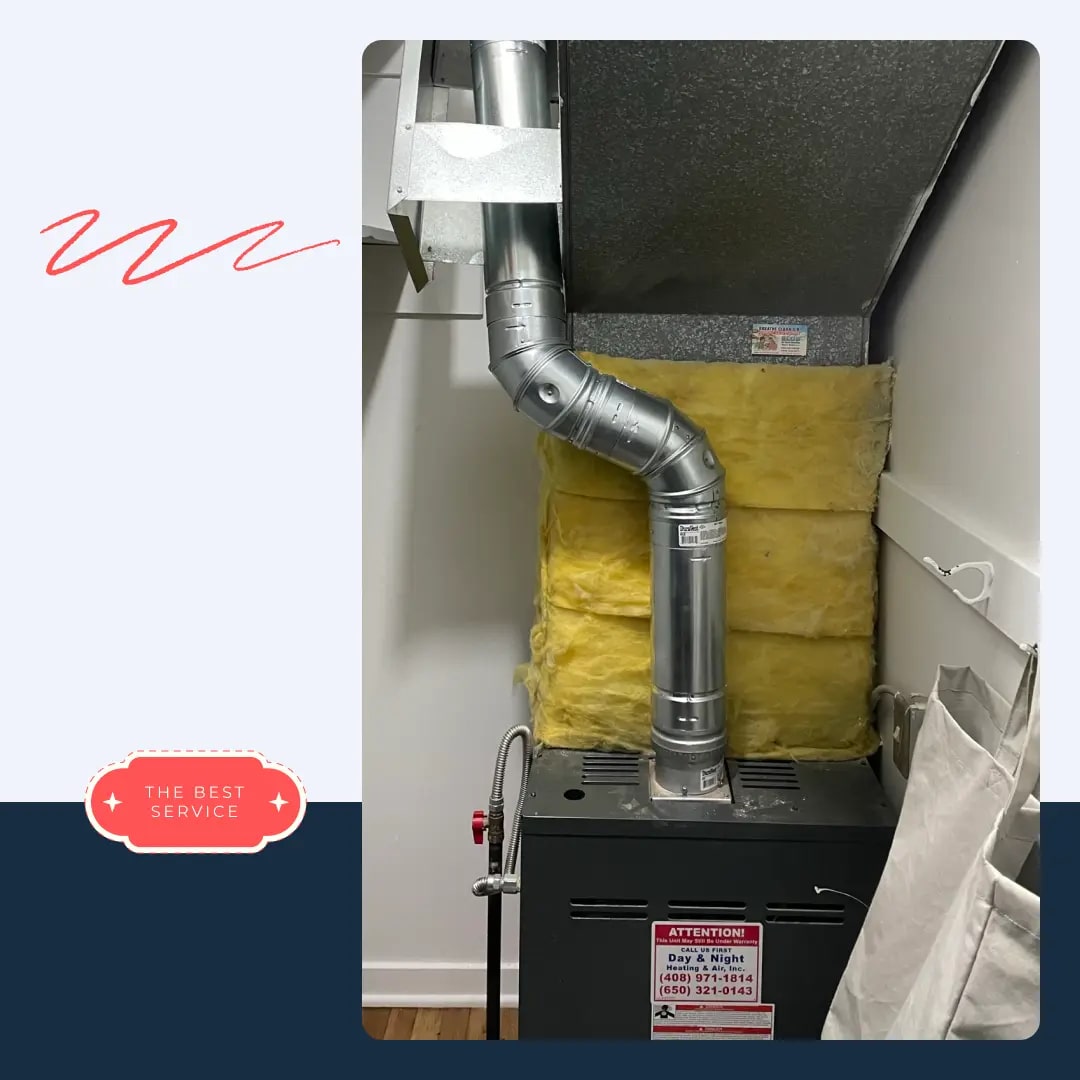
The next step: the firebox, wiring, ventilation — everything must be secured and connected by Goodman furnace installers with no slip-ups. It may seem like a small detail, but it determines whether the system will be efficient and safe.

3. We keep an eye on the airflow

Even a top-notch Goodman loses efficiency if the air isn’t going where it should. Proper ducting and sealing are like air highways: everything needs to flow smoothly, or the furnace struggles and ages faster.

4. We test it before leaving

And here’s the kicker: we run the furnace in all modes and check every room. This lets us spot anything out of place immediately, avoiding headaches later when it’s cold and you don’t have time to troubleshoot.

How Smart Technology Is Changing the Methods of Goodman Furnace Installers

Veterans in our industry remember that 20–30 years ago, installation was simple. Literally three steps: 1) place the unit, 2) hook it up to gas, and… 3) move on to the next job.

Everything “smart” back then meant manually adjusting the thermostat and hoping the ducts wouldn’t get clogged.

But now?

Installation has turned into a full-blown science that makes life more comfortable and helps save energy. At the same time, it raises the bar for every Goodman furnace installer who makes it all happen:

  • Smart Thermostats

They don’t just turn the furnace on and off. They can adjust the temperature according to your schedule, learn your habits, and save energy when you’re away. Almost like a personal assistant for your heat.

  • Zoned Heating

The next insight: you don’t have to heat the whole house the same way anymore.

For example, you can keep the bedroom comfortable while the living room is a bit cooler. Energy savings plus more comfort for everyone.

  • Variable-Speed Blowers

Back then, the blower either ran full blast or not at all.

Now it can run at different speeds, adapting to the home’s needs. Quieter, smoother, more efficient, and longer-lasting.

The Details Every Goodman Furnace Installer Knows

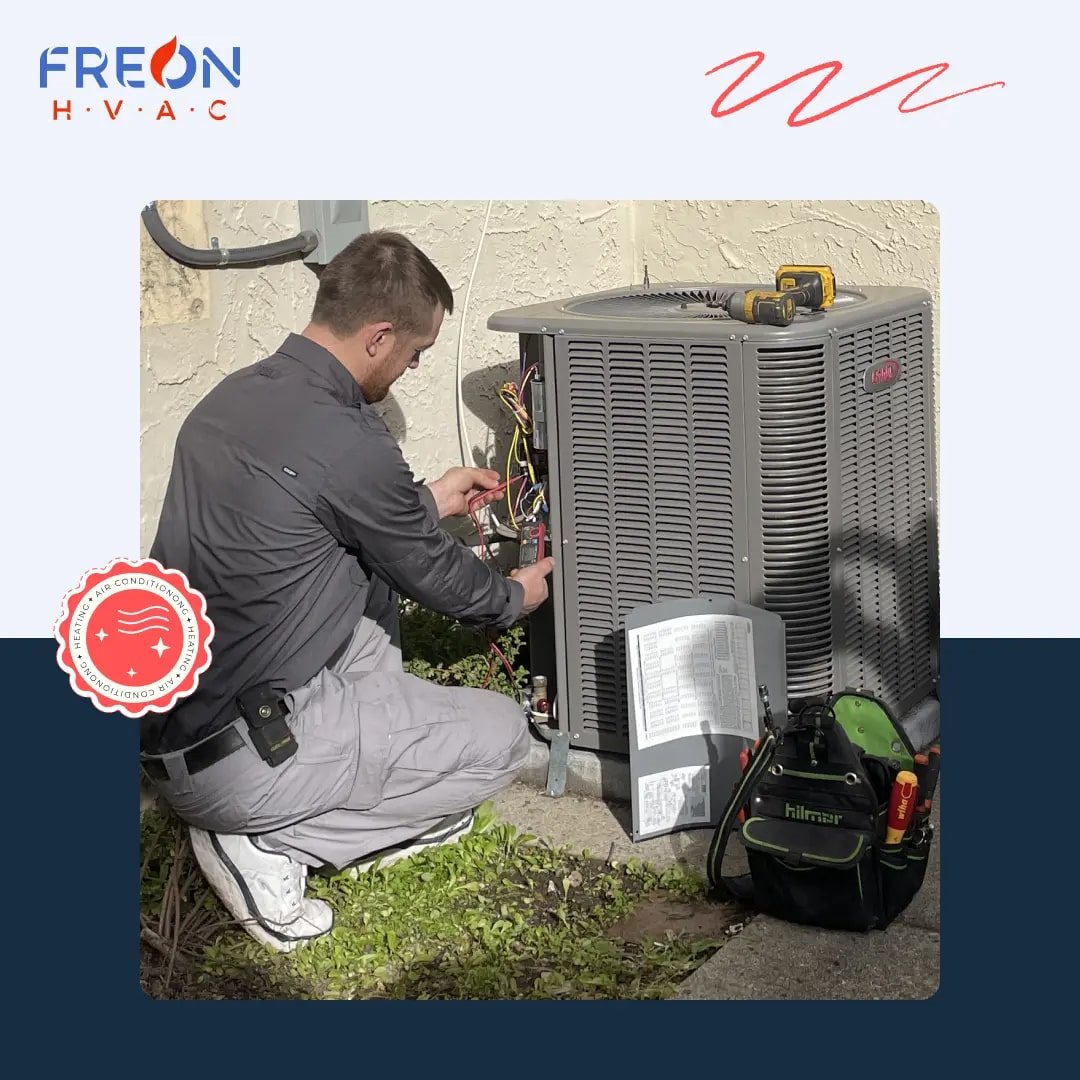
Every tech at Freon Service can tell almost immediately that even if an installation looks simple, it’s the attention to detail that determines how efficiently and safely the system will run.

Let’s take a closer look:

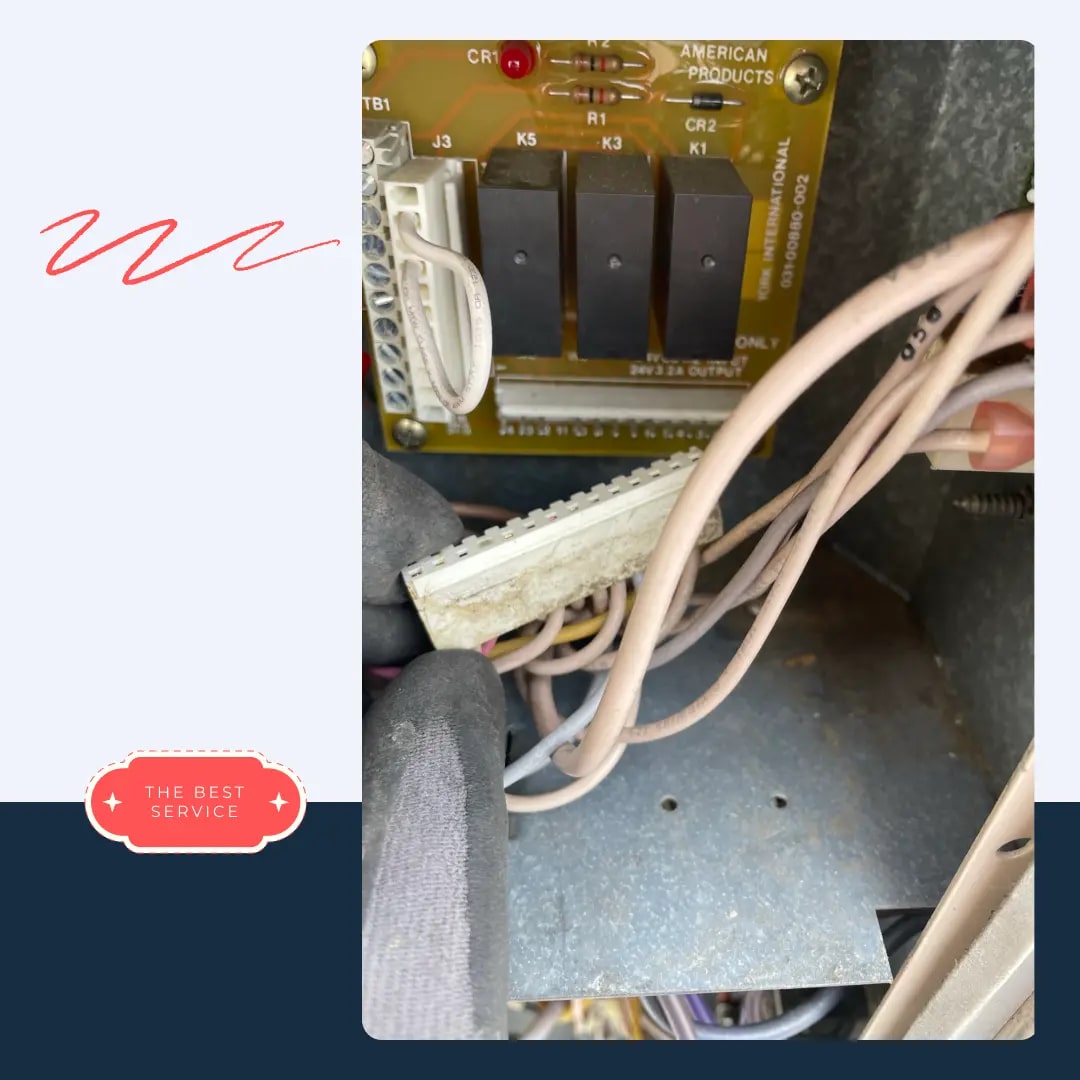
  • The installer needs to accurately calculate the load, connect the wiring correctly, and ensure proper grounding. Incorrect connections can lead to tripped breakers, overheating, or even damage to the furnace.
  • So here’s what’s going on: even a small mistake in duct routing or sizing can reduce heating efficiency, cause noise, and create uneven temperature distribution throughout the house.
  • Our Goodman furnace installer also considers service access, ventilation, and proper clearances from walls and other equipment. Mistakes here can lead to overheating of the cabinet or issues with the flue.
  • The essential point is: the furnace must be set up specifically for your home. Everything is accounted for:
    • correct gas or electrical flow,
    • pressure adjustments,
    • thermostat checks,
    • safety switch verification.

Without this, the unit can behave unpredictably, make noise, or consume extra energy.

  • Let us give it to you straight: every one of our techs strictly follows NEC, local building codes, and manufacturer instructions. No joke… breaking these rules can void your warranty and cause issues during inspections.

Stop Problems at the Source: How to Choose the Best Goodman Furnace Installers

Getting this right is almost half the battle. At Freon Service, we don’t just install Goodman furnaces — we make sure your system runs efficiently, quietly, and lasts for years. Here’s what we offer and why:

  • All our techs are fully licensed and insured. That’s your guarantee that the installation is safe and meets San Jose standards.
  • We back every installation with a guarantee. If something goes wrong (rare, but it can happen) — we’ll come back and fix it, no questions asked.
  • Every one Goodman furnace installer knows these units inside and out. That means the job gets done without surprises or shortcuts.
  • But the real deal is: hundreds of satisfied clients in San Jose have already experienced the quality of our service. We can always provide real reviews and recommendations.
  • Here’s the surprise element: Curious about what we actually do? Don’t hold back. We’re happy to walk you through every step of the installation, show all calculations, and test the system with you once every component and connection is properly secured.

Usage Tips from Goodman Furnace Installers

We’ve put together a catalog of mistakes our clients or their households sometimes make — so everyone can avoid negative consequences:

  • Keep pets off air intake grilles and the top of the furnace. Those parts get extremely hot and can be dangerous to touch.
  • Don’t dry clothes on the furnace. You can place clothing near a radiator or duct, but never directly on the working furnace. Why? Same reason — fire hazard.
  • Respect the “safety zone” around the furnace. Leave at least 12–20 inches (30–50 cm) of free space around it. Sofas, cabinets, rugs — none of this should block airflow.

When the installation is complete, every screw is in place, air flows freely, and the furnace responds to the thermostat quietly and accurately — that’s when you can truly enjoy the craftsmanship of Goodman furnace installers at Freon Service.

The bottom line is: we don’t just know what to do. We also understand the climate in San Jose and surrounding areas, so every installation:

  • accounts for local temperature swings,
  • ensures optimal airflow throughout your home,
  • guarantees efficiency even on the hottest days.

Contact us to see for yourself — we promise, we’re not exaggerating.
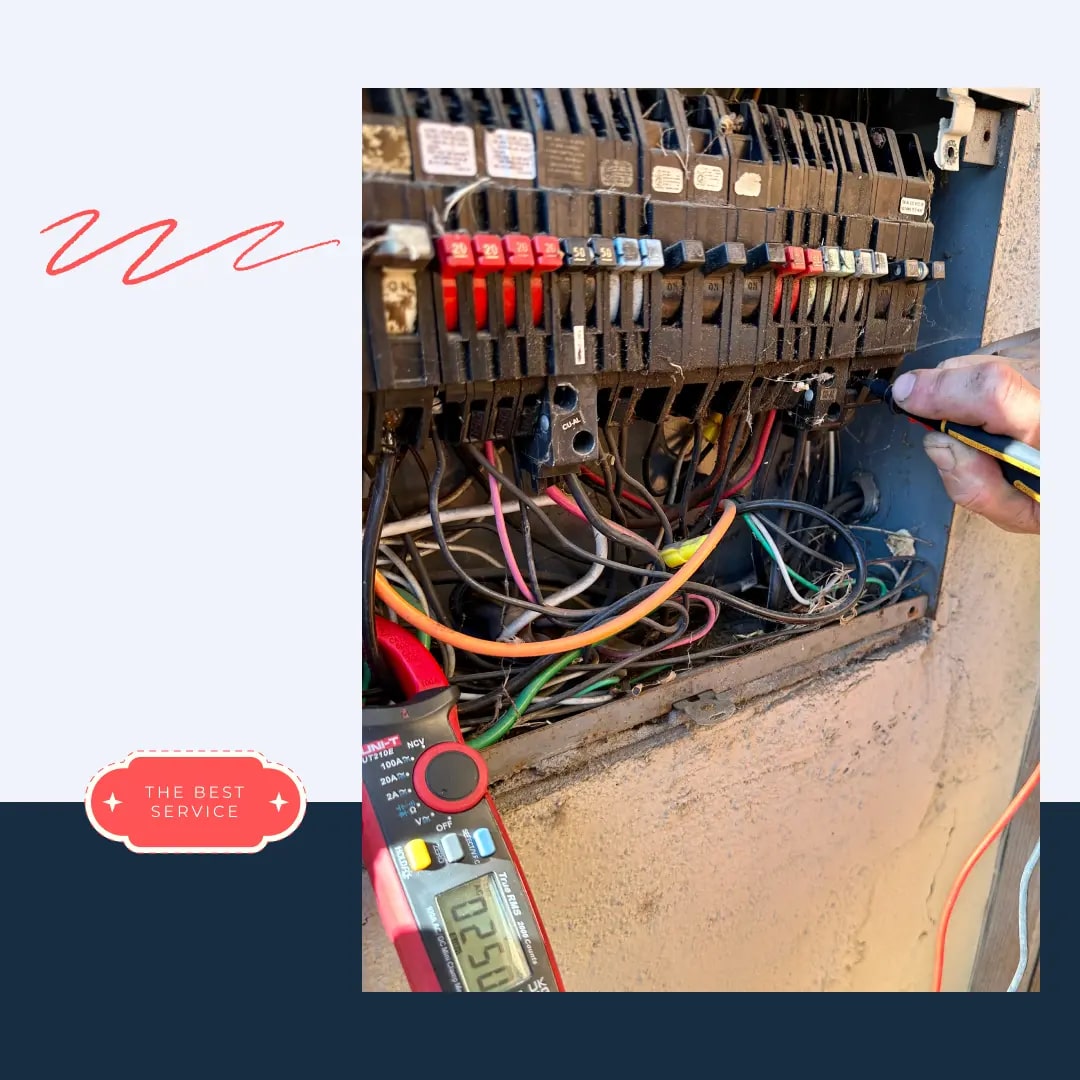
What Is a Circuit Overload and What Should You Do About It?

When homeowners hear the phrase “circuit overload,” they often imagine something dramatic — sparks, burning smells, tripped breakers. But in reality, everything starts much earlier, at the level of invisible processes happening inside the wires. Right now, the specialists at Freon Service will explain in detail how to detect this problem before it appears and how to protect your property from potential danger.

Ampacity and an Overloading Circuit

To understand who the hero of our story is without unnecessary dramatization, you only need to know the following:

  • Every electrical circuit has a capacity — its maximum ability to safely carry current.
  • In engineering terms, this is called ampacity — the allowable current at which none of the participants in the electrical exchange overheats and everything continues to operate normally.

What is circuit overload, simply put?

  • A circuit is like a pipe, and electrical current is like water under pressure.
  • A weak flow passes easily.
  • A medium flow — normal and safe.
  • But if the pressure becomes too high, the pipe begins to swell — and it can no longer handle it.

An overload occurs. This is not a “breakdown” — it’s the normal work of the protection system that saves your wiring and your home.

What Causes an Overloaded Circuit: The Obvious and Not-So-Obvious Culprits

Contrary to popular belief, a circuit overload isn’t always about how many devices you plug in.

More often, it’s caused by a mismatch of conditions — when the line simply wasn’t designed for the load you’re giving it:

  • Old kitchens, garages, or basements often have wiring rated for 10–15 A. But modern appliances — a microwave, toaster, space heater, or vacuum — already demand 12–15 A each. If you plug two such devices into an old line, an overload is inevitable.
  • Add seasonal loads on top of that:
    • in winter: heaters, fan warmers, oil radiators;
    • in summer: air conditioners, portable AC units, dehumidifiers.

These devices multiply the load on the circuit for several months straight.

  • Cheap or “thin” extension cords may look sturdy but can be rated for only 6–10 A. An overload can occur when you plug a heater or an electric kettle into them. An innocent appliance starts working at its limit, melting the cord and stressing the line. But wait, there’s more…
  • Not-so-obvious wiring defects also sharply reduce ampacity:
    • old aluminum,
    • oxidized contacts,
    • poor wire splices,
    • old outlets with worn clamps.

This kind of wiring heats up faster and overloads even under a normal load.

  • Today, almost every home has dozens of “invisible consumers”: chargers, TVs, computers, routers, air purifiers. They quietly “eat up” 20–40% of the line’s limit. So when you add a large appliance — the circuit is already partially occupied.

What Happens When You Overload a Circuit: Early Signs

It’s important to notice this problem at the earliest stage. Fortunately, it’s possible, because the electrical system gives subtle signals long before anything turns into an emergency. You’ll spot them easily if you know where to look:

  • Lights slightly dim when you turn on the microwave or vacuum. This means the line is already working right at the edge of its ampacity.
  • An outlet or plug becomes warm, even though the appliance seems “ordinary.” Heat is wiring’s first enemy. Hold on, there’s more…
  • A hum, vibration, or faint crackling coming from the breaker panel. This may point to a loose connection or terminals starting to burn.
  • And the plot thickens: Random light “flickering,” especially when appliances with a motor start up. These appliances draw a high inrush current, and the line is already at its limit.
  • The smell of heated plastic near outlets or a power strip (even a mild one). That’s a warning sign. What happens if you overload a circuit completely? Smoke will appear.
  • Next on the list: Power strips or multi-plugs getting warm even with just a few devices connected. This means there’s worn metal inside or a cheap, thin conductor.
  • And now for something else: The breaker doesn’t trip, but works “right on the edge” — the housing feels warm. It’s supposed to stay cool. A warm breaker is a clear sign of overload or a poor connection.

Do you notice any of this in your home? Time to act. Don’t wait until the army of electricity breaks through the defenses.

Will an Overloaded Circuit Fix Itself?

Long story short: no, and here’s why:

  • An overloaded circuit doesn’t “heal itself,” because the very nature of an overload is exceeding the allowable load. As long as the cause stays in place, the situation stays exactly the same.
  • The breaker doesn’t fix anything either — it doesn’t “treat” the circuit; it performs one job: to cut the line so it doesn’t heat up to a dangerous level. Its tripping is a symptom, not a cure.
  • Contacts that took a hit during the overload don’t regenerate on their own. If they’ve already started to burn or loosen, the process moves in only one direction — toward deterioration.

How to fix a circuit overload? Let’s not tiptoe around it: Sometimes the problem requires professional intervention. Call us if:

  • The breaker trips once a day or more.
  • Lights “float” around the house under load.
  • There’s crackling or hissing coming from a junction box.
  • The home is older than 25–30 years and the wiring hasn’t been updated.
  • After a remodel, the situation got worse instead of better.

The main thing to understand is that if a circuit is asking for help — it needs to be fixed, not left alone hoping it’ll change its mind. Which logically brings us to the next section.

How to Fix a Overloaded Circuit: the Freon Service Approach

Let’s seriously talk about engineering solutions that actually fix an overload:

  • Splitting an existing line into two. This reduces the load on each conductor and makes the circuit more stable.
  • Installing a dedicated line for the kitchen, heaters, or air conditioners — especially when old circuits weren’t designed for modern appliances.

Ready for more?

  • Choosing breakers with the correct rating. Old homes often have breakers that are “too large,” which hides the problem instead of fixing it.
  • Replacing aluminum wiring with copper. This increases conductivity and reduces heating.
  • The next trick: installing a Load Management Relay. It automatically prevents overloads by managing current between appliances.
  • Augmenting lines with smart outlets that monitor current. This lets you see where peaks occur and control them.
  • Moving heavy-duty appliances to dedicated breakers. For example: washer, dryer, or EV charger.
  • And it gets even smarter: proper phase balancing in a private home. Especially important when there are three-phase connections — it reduces the risk of one line being overloaded.

Which of these solutions fits your house? Invite the Freon Service techs so they can understand what are overloads often caused by at your place, assess all your home’s electrical needs, and answer that question thoughtfully.

Subpanel vs Main Panel: A Simple Explanation of a Complex Topic

If questions about the main panel rarely come up, not everyone knows that a modern home often has another hero — the subpanel. Why is it there? In this article, Freon Service will explain in detail. By the end, you won’t just understand that if one is the “mission control center,” the other is the “local manager.” You’ll also discover the fascinating world of organizing a safe, stable, and properly calculated electrical system.

Separation of Ground and Neutral: Difference Between Main Panel and Subpanel

When managing the electrical system of a large home, everything needs to be perfectly organized — starting with the main hero of our article, because this is where “power” flows out to every corner of the house.

Inside this box are two elements. Think of them like two employees sharing an office: neutral and ground.

  • They work together, but sit at separate desks.
  • Their actions serve the same overall purpose, but they shouldn’t perform each other’s duties.

Looking at the subpanel vs main panel situation, we see that in the main panel, neutral and ground are connected. Why is this done intentionally, and only once for the entire house?

  • Because this is the starting point, the “zero level,” from which energy enters the home.
  • Here there must be a single, clear path that returns current to the ground in case of a fault.

It’s like the only emergency exit in a large building — it must be one, clear, and controlled.

The difference between main panel and subpanel is that the latter “separates to prevent chaos.” Why?

Imagine letting these two employees sit side by side again. Here’s what could happen:

  • Situation 1: Lost current

If neutral and ground are connected in a subpanel, part of the current starts flowing through the grounding wires, pipes, and equipment enclosures.

It’s like the employees running not through the hallways, but through the ventilation system:

– Fast? Maybe.

– Safe? NEVER.

  • Situation 2: A “live” frame in the workshop

You turn on a machine, and suddenly the metal frame receives stray current through the ground — giving a slight “tingle.”

This isn’t just unpleasant — it can be dangerous.

The main point is: in your estate, no matter how big, there can only be a single control point where neutral and ground are connected.

Backfeed as an Indicator of the Difference Between Main Panel and Subpanel

Imagine the current suddenly finding a new path it wasn’t supposed to see:

  • Neutral and ground connected in a subpanel.
  • A loosely secured wire.
  • An extra grounding point that “dad installed back in 1978”.

Then the current starts returning to the source not through the neutral, but through anything it can touch. This is backfeed.

In the context of main panel and subpanel, backfeed happens when part of the current that should flow along its clean, predictable path (the neutral) suddenly starts traveling throughout the house:

  • You turn on a band saw or air compressor — and feel a slight “tingle” on the frame.
  • Electric shocks can appear on a faucet, radiator, or pipe.

This isn’t static electricity. It’s a stray current that came back through the ground. And it’s dangerous.

The technicians at Freon Service don’t just install a subpanel — they make sure that the combination of your “existing electrical system” + the “new upgrade” doesn’t create the hazard of stray current.

Difference Between Sub Panel and Main Panel — How to Deliver Power from One to the Other

To do this correctly, our technicians use a four-wire feeder. It includes:

  • Two hot wires. Essentially, these are the “muscles” of the system, carrying 240 V for heavy appliances and 120 V for regular ones.
  • One neutral conductor. This is the working path for returning current.
  • One separate grounding conductor. It sits quietly, does nothing, and only activates in an emergency, safely directing dangerous current to the ground.

If we put the main panel and subpanel into a visual analogy, you can picture it like trucks on a road:

  • Hot wires — two big rigs delivering energy to the subpanel.
  • Neutral — the worker collecting empty containers and bringing them back.
  • Ground — the tow truck that only activates in case of an emergency.

If you only had three wires instead of four, the tow truck would have to drive on the same road as the regular trucks. And that’s a recipe for disaster.

Thanks to having two separate return paths, this feeder prevents the creation of backfeed.

Main Panel and Subpanel — Do You Need Both?

Answering this question requires a careful load calculation. To avoid constant breaker trips, overloads, and risks, it’s important to understand how much energy your appliances will “pull.” To do this:

  • List all appliances/circuits that will be powered by the subpanel:
    • lighting,
    • outlets,
    • stationary tools,
    • washer,
    • dryer,
    • EV charger,
    • HVAC, etc.
  • Determine their power (in watts) or current (in amps).
  • Sum up the continuous and temporary loads:
    • Continuous loads are, for example, the refrigerator and lighting.
    • Temporary loads are drills in the workshop, welders, stoves — basically, anything that’s not on all the time.
  • Apply demand factors.
  • Convert the power to amps for the chosen voltage.
  • Keep in mind that a panel shouldn’t operate at 100% capacity continuously. Leave a buffer — 80% is sufficient.

So, this isn’t just about the winner in the subpanel vs main panel matchup. It’s about understanding the total demand considering the existing loads in your home. If it exceeds the main service’s capacity, an upgrade may be required (for example, to 200 A).

We always recommend planning a buffer: it’s better to have a slightly larger panel than one that’s maxed out.

Load calculations aren’t always simple. Applying demand factors and accounting for complex loads can take significant time. The best approach is to hand this task to the technicians at Freon Service. We will promptly:

  • perform the calculation according to NEC/CEC,
  • advise if a service upgrade is needed,
  • select appropriate wire sizes and breakers,
  • handle the permit.

But the benefits don’t stop there: if you want everything done by the book, considering the difference between sub panel and main panel, and with no surprises, we’ve got you covered. We don’t just “install a panel” — we make sure every wire and every label inside is logical, neat, and clear to any inspector. No chaos, no unnecessary discussion, no delays “for later.”

How Does a Sub Panel Work: Your “Local Energy Manager”

This little piece of your home’s electrical map has a serious and responsible job. It receives the flow from the main panel and decides where that energy goes and how much each area gets. It doesn’t just distribute the load — it also lets you control individual zones, add new circuits, or shut off parts of the house without putting the whole system at risk.

In this article, Freon Service will show you how this small but very smart “current traffic controller” works and why it makes a homeowner’s life easier.

How Does a Sub Panel Work When It Distributes Energy Around the House

It receives power from the main panel through a feeder — the primary line that delivers the current. Inside the subpanel, that flow gets split between individual breakers, and each one is responsible for a specific circuit:

  • the kitchen lights,
  • the garage outlets,
  • the workshop,
  • the heat in the bedroom, and so on.

If you need to shut off one zone — say, the workshop for repairs — you flip a single breaker in the subpanel and the rest of the house stays untouched.

Convenient, right? Moving on:

Over time, your household gets new loads — for example, an EV charger pulling 7 kW.

What is a subpanel if not the hero that lets you add a dedicated line with its own breaker?

  • Now your new “toy” will never complain about unstable power.
  • And all your other electric residents will keep functioning without overloading the existing circuits.

In essence: each device or zone gets the power it needs through its own breaker. It’s safe and easy to manage.

What Is a Subpanel and How Does It Help Split Big Circuits?

The clinching detail is this: your home is fed by a big “main highway” of energy — 60 or 100 amps.

If you tried to run every appliance, every outlet, every light through that single road, you’d get constant jams, collisions, and chaos.

That chaos is what electrical overload looks like.

What’s a sub panel? It’s a well-designed transportation hub that takes that powerful flow and divides it into calmer, safer “streets”:

  • One for the garage lighting — 15 A.
  • Another for the workshop outlets — 20 A.
  • And also for bench tools — again 20 A.

Each street has its own guard at the gate: a dedicated breaker.

  • Say you turn on an old sanding machine in the workshop and its cord shorts out. What happens?
  • Exactly — the guard on that street clicks and blocks just that one area.
  • The garage light stays on, the kitchen fridge keeps humming, and the whole house doesn’t even notice the tiny drama.

What Is Sub Panel and Its Obvious Advantages:

  1. The main panel doesn’t choke on load.

It sends out big portions of power, and our story’s hero neatly redistributes them through its “districts.”

  1. Finding a problem becomes easy.

See one breaker flipped? That’s where the issue is — no need to run around the whole house with a tester.

Yet, the most notable thing is coming…

  1. Adding a new device is simple.

Need a line for a welding machine or an EV charger? Isn’t that exactly what is a sub panel used for?

Open it, add a new “street,” done.

  1. Voltage stays more stable.

At present:

  • The current flow is distributed correctly.
  • Voltage drops happen less often.
  • All the devices that live off the chaos of electrons, positrons, and protons run smoother.
  • Breakers don’t trip for no reason.

How Does a Subpanel Work: Real-Life Scenarios — or Scenes from a Movie

Here begins your magical journey through what your little hero makes possible:

  • The garage is shaking from the bass. Teens are dancing.
  • Music blasting, string lights flashing, fog machine blowing.

It’s a classic secret party while the parents are “still in the city.”

What comes next:

  • The sixth-grader host goes pale reading a text: “The theater had an issue, we’re coming home early.”
  • He yells, “Everybody out!” But nobody hears him.
  • He jumps to the small subpanel in the garage corner and flips one breaker.
  • Music stops. Lights die. Fog clears.
  • And his college-age friends can finally hear that it’s time to wrap up the celebration.

But here’s the important part:

  • The walkway lights around the house stay on, because they’re powered through another channel.
  • Guests quietly slip into the yard, following the soft outdoor light.
  • Parents walk into the house half an hour later and see perfect calm — as if absolutely nothing happened.

What is a sub panel used for in this example?

  • It cuts power only to the “party district.”
  • Leaves the main house untouched.
  • Keeps the perfect cover.

Of course, these scenarios show up in plenty of other situations.

Let’s take it further and talk about seasonal changes:

  • In winter you turn on heaters — in the office, the living room, the enclosed porch.
  • In summer — the opposite: AC units, the pool pump, fans.

And every season reshapes your home’s energy map.

At this moment the subpanel is like an energy-grid dispatcher:

  • It sees where more power is needed right now.
  • It directs energy there without overloading the main line.

It only gets better:

Maybe you called a tech from Freon Service to fix an outlet in the garage.

In a normal house you would have to shut everything down — the fridge, Wi-Fi, kitchen, lights — and work in the dark.

But what is a subpanel breaker box if not civilization?

  • The specialist walks up, switches off one specific breaker — and only the garage “falls asleep.”
  • Everything else keeps running: kids watching cartoons, the washer spinning, dinner cooking.

This is local control — like turning off one room, not the entire house.

What Is a Sub Panel and Its Practical Value for You

  1. It turns the chaos of electrical lines into a manageable, logical system.
  2. It makes your home more “aware” of your needs: some areas are calm to work in, others can host high-power devices without disturbing the rest.

Freon Service is ready to bring you that level of electrical comfort with one call.

All lines, breakers, and zones on your property will start working in harmony.

And you’ll know that every kilowatt of energy goes exactly where it’s needed.

How to Connect Nest Thermostat: The Complete Guide

When a Nest moves into your home, it’s like you just adopted a tiny climate helper.

A sort of household elf or garden gnome who, for a number of reasons, prefers living inside rather than outdoors.

He’s smart, polite, and always trying to keep the temperature perfectly comfortable.

But he’s a team player. To unlock his full power, you need to “befriend” him with your phone, Wi-Fi, and your HVAC system. Freon Service will show you how.

First Things First: How Do I Connect to My Nest Thermostat?

Here’s what you should know about your new arrival:

It’s the brain of your climate system — smart, flexible, logical, trainable.

Don’t confuse it with the AC unit itself. It does not:

  • Produce heat or cold
  • Blow air
  • Work as a compressor
  • Spin any fan blades

It’s the boss who gives the orders:

  • Tells the system when to heat
  • Decides when it’s time to cool
  • Sets the target temperature
  • And mercifully sends all “workers” on break once everything is done to his high standards

Now that the introduction is out of the way, here’s how to set up Wi-Fi on nest thermostat.

Step 1. Look at the little elf’s home — the shiny round nest on your wall. Press the ring.

Step 2. Go to Settings → Equipment. Here you can see:

  • What deals he has negotiated with your AC, furnace, and fan
  • And how he decides who does what, when, and with how much power

Step 3. Check whether the elf correctly identified all the “magic threads,” also known (in boring technical language) as your HVAC control wires:

  • R — life energy (power from the outlet)
  • Y — force of cold (cooling)
  • W — fiery warmth (heating)
  • G — breath of wind (fan)
  • C — the amulet that grants stable magic (steady power for smart features)

If something isn’t working right, the elf will absolutely tell you. He’s too responsible to hide issues.

How to connect to a nest thermostat completely?

Step 4. Save your settings — and watch the magic awaken.

Honestly, if Freon Service techs handled your installation, you don’t even need to dive into these details. Our specialists:

  • Speak the language of these magic threads
  • Know how to make the elf get along with every device in your home
  • And can tune the entire system so it works without mood swings

Because our techs truly know how to connect to nest thermostat:

  • Each wire goes into the correct terminal
  • System compatibility is verified
  • The C-wire is added if it’s missing (and that’s very common!)
  • Modes are fine-tuned so Nest runs quietly, smoothly, and efficiently
  • AC, furnace, and heat pump reactions are tested

But if you like understanding what’s happening in your home — and want the ability to make quick adjustments when needed — we respect your desire for competence and invite you to continue.

How Do I Connect My Nest Thermostat to Wi-Fi: The Next Stage

Without the internet, your climate elf is like a wanderer lost in an empty forest.

His brain works, but he can’t get updates, show history, or follow commands from the app.

To give him the data he needs:

  • Go to Settings
  • Select Network
  • Find and tap your Wi-Fi
  • Enter your password

If your network doesn’t show up:

  • Reboot your router
  • Move your phone closer (to check the signal)
  • Make sure the 2.4 GHz band is enabled

That’s usually enough to make the network reappear on the screen.

Add Thermostat to Nest App: Meeting the Phone

For this ceremonial introduction, you need three things:

  1. A phone with Nest App or Google Home
  2. A stable Wi-Fi
  3. A QR code (you’ll find it on the back panel or in the menu)

The little “move-in ritual” looks like this:

  • Open the “doors” of the app
  • Tap + Add device — this is your official invitation to the elf
  • Scan his QR code — the phone reads the magic runes identifying the new resident
  • Confirm Home and Room — every elf needs to know where he’ll live and work

This is the sweet moment when your tiny climate elf greets your phone, and the phone replies:

“Welcome, buddy, let’s work together.”

What can go wrong during the adding nest thermostat to nest app?

From Freon Service experience, most people “stumble” at the QR scan stage.

If that happens:

  • Wipe your phone’s camera lens — maybe it got dirty or fogged
  • Still nothing? You can enter the code manually. It’s less magical, but this old-school spell never fails.

How to Connect Nest Thermostat to Phone

You’d think we should’ve started with this, but actually this step only works once the elf has formed some connections:

  • He already has Wi-Fi
  • And was added to the app via QR

And technically, you’re not connecting your phone to the elf.

You’re connecting both of them to Google’s cloud.

Here’s how:

  • Make sure the thermostat is already in Nest App / Google Home
  • Log into your Google Account on your phone
  • Open the app
  • Your climate elf will already be there — standing, smiling, and waiting for commands.

How to Add Another Phone to Nest Thermostat?

Great question!

Temperature control doesn’t have to be centralized. Learn to delegate to your…:

  • Partner
  • Kids
  • Parents
  • Realtor
  • Housekeeper
  • Neighbor watering your plants while you’re on vacation

Here’s what to do:

  • Open Google Home
  • In Settings, select Household
  • Tap Invite Home Member
  • Enter the person’s email
  • Once they accept — the new member can do it all: adjust climate, view history, change modes.

And speaking of your commands…

You can send them from anywhere on the planet where there’s internet:

  • From an airplane over the Atlantic at 36,000 feet
  • From a cruise ship in the Mediterranean, even though there’s only water around
  • Most unexpectedly: Even from a forest campground where your phone barely has a signal.

Isn’t that magic?

When all is said and done…

Connecting a Nest Thermostat to Wi-Fi, your phone, the app, and your HVAC system isn’t hard once you understand the logic.

You can just as easily figure out how to program a nest thermostat:

  • Open the Nest App
  • Go to Schedule
  • Add time points: morning, work, evening, night

Or pick one of the main modes:

  • Heat
  • Cool
  • Heat + Cool (maintain a range)
  • Eco
  • Auto-Schedule — your elf writes the schedule himself
  • Manual Scheduling — full control is yours

Remember: this new device is a small climate brain that wants one thing —

to learn your habits and make your home comfortable, efficient, and predictable.

And if something goes off track — Freon Service is always here.

We’ll connect, tune, reconnect, and show you how to get the absolute most out of any smart thermostat.

Thermostat “Hold” vs “Set”: Two Personalities Under One Roof

If thermostats were houses, each would have at least two residents. There’s the calm, reliable “Set,” and the sensitive, emotional “Hold,” who reacts to every situation in his own way.

Understanding the difference between these two “personalities” helps you avoid chaos, energy overpayments, and endless attempts to understand why your home suddenly feels warmer or colder than usual.

Here comes the moment of truth, when you finally meet this surprising duo and break down how each of them works together with Freon Service.

Thermostat “Hold” vs “Set”: Whom to Rely On and When

“Set” is the part of the thermostat that loves order:

  • She follows the schedule.
  • She respects the plan.
  • She knows that mornings need one climate and evenings another.
  • Drifting off-course? Not her thing.

Her motto: clear, steady, according to the timetable.

Here’s a short overview of situations where using SET works best:

  • You change the temperature briefly and want the thermostat to return to the schedule on its own. For example, you feel too warm — you lower it by a couple of degrees.
  • During everyday use, when your schedule works fine.
  • In situations where you don’t want to interfere with energy efficiency.

Remember: the main advantage is automatic savings — the thermostat will revert to optimized settings on its own.

“Hold” is a completely different type:

  • Sometimes he’s patient (Permanent Hold).
  • Sometimes impulsive (the Temporary one).

But above all, he steps in, overrides the schedule, and takes control.

His battle cry: “I’ll hold this temperature until the owner says stop. And no schedule tells me what to do!”

What Does Temporary “Hold” Mean on a Thermostat: I Need a Plan

As the name suggests, this character holds the temperature until the next programmed period begins. Usually this means:

  • Morning
  • Day
  • Evening
  • Night

What else can we say about this tenant of the thermostat?

  • He’s a temporary guest who still lives by the owner’s timetable.
  • He’s flexible: “You want it warmer right now? No problem!”
  • But unreliable: “I’ll stay… but only until the next scheduled event. After that, I’m gone — I have my own plans.”

He doesn’t argue, but he also doesn’t commit: “I’m not here forever, don’t count on me long-term.”

What does temporary “Hold” mean on a thermostat? It’s the perfect option when:

  • Someone is cold or overheated right now.
  • You’re home at an unusual time — but only for today.
  • Plans changed for a couple of hours.

Examples:

  • You got home early — you warm the house up temporarily.
  • Guests arrived — you cool the space down a bit.
  • You woke up later than usual — you keep the nighttime temperature a little longer.

Advantage: Everything returns to its normal track automatically.

What Is Temporary “Hold” on Thermostat if There Is No Schedule?

This is a very important question because it exposes the hidden nature of this feature.

Think about it: his whole being is built around following orders and jumping back onto familiar tracks at the first chance.

But what if those tracks don’t exist at all?

If your system has no programmed periods — meaning the schedule is disabled — then what does temporary “Hold” mean on thermostat?

  • He simply turns into a regular Set.
  • The thermostat will hold the chosen temperature until you manually change it again.
  • There is no “next period,” so there’s nothing to switch to.

In this situation, Temporary Hold behaves almost like Permanent Hold — just without the formal “forever” label.

This is where his dependence on structure becomes most obvious:

“If there’s no schedule… well… I have no idea when I’m supposed to leave. So I’ll stay until you tell me otherwise.”

What Is Permanent “Hold” on Thermostat: Let Everything Stay Predictable

It happened: intentionally or by accident, your finger hovered over Permanent Hold and pressed it into the panel.

Did you notice what the temperature was at that exact moment?

  • “No.”

That’s bad — now you’re living in a home with an unknown degree.

  • “Yes.”

That’s good — because from now on, that number will live on your screen permanently.

  • “I didn’t care, it just felt comfortable.”

Then from now on, at this same time of day, you’ll feel just as comfortable. But what about the other periods?

Why does this matter? what is permanent “Hold” on a thermostat?

He’s the champion of an unchanging routine who keeps the exact temperature you selected until you press “Run Schedule.”

He’s very steady, almost rigid.

If he were sitting in a psychologist’s chair, he’d say:

“You see, I just want everything to be predictable. I set the temperature and I hold it… endlessly. But everyone complains that nothing can change while I’m in charge, unless someone disables me manually.”

For example:

  • You set 70°F and activate the thermostat permanent “Hold”.
  • The thermostat keeps 70°F for hours or even days.
  • Feeling too warm or cold? Time to cancel the command manually.

Best for:

  • Vacations, trips, business travel.
  • When your schedule is outdated and you want a stable temperature.
  • A guest house: keep it 70°F until someone visits.
  • Elderly people or kids who need consistent comfort.
  • Emergency situations (like protecting pipes in winter).

Consistency is this hero’s gift — but it’s also his blind spot.

Temporary vs Permanent “Hold” Thermostat: Is There a Winner?

Now you’ve met all the “tenants” living inside your thermostat.

  • You have the calm planner Set, who loves order and schedules.
  • You have the emotional, reactive Temporary Hold, who responds to everything in the moment.
  • And the iron-willed, unshakeable Permanent Hold, who loves stability and keeps the chosen temperature as long as you allow it.

But is there a winner?

We believe a winner only exists where there was a competition. Inside the thermostat, there isn’t one. Its job is to give you maximum comfort while keeping your home at the right temperature when you’re away.

That’s why, at Freon Service, we encourage you not to choose one feature “for every situation,” but to stay flexible and use all the bonuses the device can offer.

If you’re unsure about the settings and don’t quite understand, for example, what does temporary mean on thermostat, invite our specialist.

We’ll configure everything according to your needs and explain when and how to adapt each function to changes in your daily routine.

All that’s left for you is to enjoy the perfect atmosphere.

What Is an Electrical Subpanel: A Clear Look

Imagine your home as a city, and electricity as the flow of traffic. The main panel is like the central bus station or a big interchange: all the energy from the city grid arrives here, and from here it’s distributed along the main streets.

But then a new neighborhood opens up—a workshop, garage, or ADU. Pulling the flow all the way from the central station is far and inconvenient.

What to do?

This is where a small “local distribution point” comes in. It receives power from the main panel. It’s like buses bringing passengers from the central station, who then spread out along the freshly paved sidewalks of their new neighborhood.

Freon Service will now walk you through exactly how it can help and how to set it up.

When You Can’t Do Without an Electrical Subpanel

There are a few situations where it really comes in handy:

  • When you add a new part of the house—a garage, an addition, or an ADU. Instead of running long cables from the main panel across the house, you put an “extra block” right next to the new zone. That way:
    • shorter wires,
    • more stable voltage,
    • easier and safer to work with the lines.
  • It also gives you local control over that zone. For example, want to shut off the workshop or garage without touching the main panel? Now you can do it in one move.
  • And of course, there are safety and code considerations: the NEC requires that separate high-power or new zones have their own distribution. Here, the hero of our article is indispensable.

So, a simple way to tell if your home needs an extra panel: if your main panel is full and the load is growing, or if you plan new lines in a distant part of the house—almost certainly, a small helper will make life easier for your main panel.

A Simple Guide to Knowing if You Need a Sub Panel Electrical

No one wakes up thinking: “I desperately need a 20-amp line today!”

Life changes first. The electrical system is just trying to catch up. Here, you’ll quickly learn about this process.

  1. Your home grows, new zones and powerful appliances appear:
  • A more powerful stove, so cooking is faster and you don’t have to wait half an hour for something to “catch up.”
  • An oven that holds temperature steady.
  • A coffee machine that makes your morning coffee just the way you like it.
  • A kettle and air fryer so the family can cook, heat, and boil simultaneously.
  • A bigger microwave, because reheating dinner in one go is way better than doing it in batches.
  • A second refrigerator or large freezer, when the household grows and you need extra storage.
  • Bar lighting, so evenings feel cozy and look beautiful.

You want all of it to turn on without dancing with the breakers, working smoothly instead of fighting over a single outlet.

What is an electrical sub panel in this case? It’s right here: a logical solution.

  1. The garage transforms into a workspace, enriched by:
  • More powerful stationary tools that need a dedicated line, not an extension cord.
  • Charging stations for tool batteries, running around the clock without overloading one outlet.
  • Zoned lighting—bright over the workbench, softer in walkways to reduce eye strain.
  • Sometimes even heating or an infrared panel, so work can continue in winter.

Here, the electric sub panel isn’t just a desire; it’s a way to bring order: divide the load, relieve the main panel, and deliver power where it’s actually needed.

  1. The EV comes with its own demands
  • A full-fledged EV charger (wall-mounted or portable) delivering stable current.
  • A dedicated line with proper wire gauge and breaker for the charger’s specific power.
  • Load balancing, so the charger doesn’t trip the house when the oven or washing machine is running.
  • Optionally: Nighttime charging on a lower-rate plan.

This vehicle isn’t “just another appliance.” It’s a new consumer, hungry for 3–11 kW, so the house needs to be ready for that load.

To close the chapter, all these upgrades become electrical load. And as they accumulate, the main panel starts to “struggle.”

Electrical Subpanels: When Distance Really Matters

Now—another typical California scenario, familiar to almost every homeowner in San Jose.

Where is the main panel? Outside, by the façade, closer to the street—this is standard in California.

And you decided to add something important deeper on the property:

    • an ADU,
    • workshop,
    • home office,
    • kitchen expansion,
    • or a full laundry zone.

And now reality starts to feel like a quest: “Run a cable half the lot and don’t hit another beam, wall, or concrete ridge.” What is a sub panel electrical? It’s your guide from intent to optimal implementation.

Along the way, it saves cable. Every extra meter means:

  • A small but real voltage drop, especially under load.
  • Higher cost: extra tens of meters of wire is money.
  • Sometimes NEC requires upsizing the wire for a long run.
  • And, of course, extra headaches—for the contractor, for you, for the budget.

But there’s another way:

  1. You run just one strong feed—a single feeder from the main panel to the electrical sub panel.
  2. From there, you run short lines to the appliances and zones nearby.

So instead of five long cable runs across the property, you have one long run and several very short ones.

What does this do?

  • Less voltage drop: short lines stay stable.
  • Safer: fewer connections, lower chance of error or damage.
  • Cheaper: less wire, less labor, less time.
  • Cleaner and more logical: your new “neighborhood” gets its own substation in the form of an electrical subpanel.
  • Easier to service: need to shut off the ADU? Click, and nothing in the main house is affected.

The new part of your home starts living its own stable electrical life.

Basic Rules for Installing an Electrical Subpanel

Once you’ve decided this upgrade is right for your home, remember a few simple rules to keep everything safe and lasting:

  • First, electricity and water don’t mix. No panels directly above sinks, showers, or tubs.
  • Second, accessibility and space.
  • Third, installation height—reachable by an adult without a ladder, but out of children’s reach.
  • Separation of ground and neutral—mandatory!
  • Finally, protection from mechanical damage.

But don’t worry—you don’t need to know all these details or hunt down information on what is an electrical subpanel and what the latest installation requirements are according to the National Electrical Code. Call Freon Service—our specialists will handle everything properly, to the satisfaction of both the homeowner and all participants in your home’s electrical flow.

GFCI in Electrical: What Kind of Creature Is It, and Why Should You Keep Them at Home

We rarely think about how many invisible processes run inside the walls of our home. Electricity works every day, every second, without asking for attention. But when something goes wrong, it doesn’t forgive — and that’s exactly why every building needs this “resident” called a Ground Fault Circuit Interrupter.

Freon Service invites you to explore what makes it so unique — and so irreplaceable.

GFCI Meaning in Electrical and What Existed before It Appeared

We owe this invention to Charles Dalziel, a professor of electrical engineering at the University of California, Berkeley. He worked in the field of electrical injuries and was one of the first people to ask the question:

Why do standard breakers and fuses NOT protect humans?

Dalziel conducted extensive research on how electricity affects the human body. His dedication was so high that he even tested some effects on himself. And he was the first to prove:

  • Standard breakers protect wiring, not people.
  • A lethal current can be as low as 30 mA, which is far below the trip threshold of common fuses.
  • This brings us to the main idea: A new type of protection was needed — one that would react not to overload, but to current leakage through a human body.

And so, in 1961, the hero of our story was born. A free, simplified definition of GFCI meaning in electrical could sound like this: A device that saves lives not by force, but by sensitivity.

What existed before this invention?

  • Fuses, which:
    • reacted only to major overloads,
    • were slow,
    • protected wires from melting,
    • but a person could receive a lethal shock long before the fuse “realized” something was wrong.
  • Standard breakers, which:
    • protected circuits from short circuits,
    • also did NOT react to leakages,
    • and if someone stood on a wet floor and touched a live wire — the breaker saw no danger at all.
  • Grounding, which:
    • reduced the risk but did not always save,
    • and if grounding was absent (and in our country before the 1970s this was extremely common), then there was zero protection.

What Is GFCI in Electrical and What Exactly Does It Do

It’s your personal electrical bodyguard — a small watchman who stays on duty 24/7 and reacts instantly the moment something goes wrong.

You don’t need to know physics, understand wiring diagrams, or open the breaker panel — but you will absolutely feel safer when every risk zone in your home is protected.

Here’s how it works:

  • Electric current travels through the wire into your toaster, and it must return back through the neutral wire.
  • If everything is normal, it enters and exits in perfectly equal amounts.
  • If something goes wrong — for example, the appliance or the cord gets wet — part of the current may escape through droplets of water, for instance onto the metal housing.
  • When you innocently reach for that aromatic, crispy toast, even the slightest touch of the toaster’s surface could be fatal. If not for the GFCI.
  • GFCI electrical meaning is not just a technical term. It’s almost like a synonym for “safety + speed.” It “catches” leakage in a record 1/40 of a second and prevents the current from “jumping” to the ground through you — even if you accidentally touch a damp appliance or wire.

Perhaps you’re speculating: Is 1/40 of a second really such an unbelievable reaction time?

Well then, let’s compare:

  • A cat is one of the fastest domestic animals. Its average reaction time: 60–70 ms. A GFCI is 2–3 times faster.
  • A cobra or viper strike happens in 40–70 ms. GFCI reacts in 25 ms — even faster than a venomous snake attack.
  • A hummingbird flaps its wings 50–80 times per second. One flap = ~ 12–15 ms. What is GFCI in electrical world? Something that reacts in about two hummingbird wingbeats.
  • Owls blink in 100–150 ms. Our “pet” is about 5 times faster.
  • Grasshoppers initiate a jump 40–50 ms after a stimulus. GFCI is twice as fast.
  • A fly reacts in 20–30 ms — one of the fastest reflexes in nature. The hero of our story is almost as fast as a fly.

Do we really need more examples?

By now it should be clear: a GFCI is a protector that reacts faster than a human can sense danger.

GFCI in Electrical U.S. Regulations

Get ready for a surprise: our country was the first whose population adopted GFCI on a massive scale. Why?

  • A huge amount of old housing stock with no grounding.
  • High humidity along the coasts.
  • Rapid spread of household appliances.
  • Frequent accidents in bathrooms and kitchens.

All of this led to a turning point in the 1970s, when the National Electrical Code began introducing mandatory installation zones for our hero:

    • first swimming pools,
    • then outdoor outlets,
    • garages,
    • kitchens,
    • bathrooms.

This was the moment everything shifted.  After all, what does GFCI stand for in electrical terms? Exactly — safety.

This was confirmed by data from the Electrical Safety Foundation International:

  • After GFCI devices entered American homes, fatal electric shocks dropped by about 81%.
  • Electrical accidents involving consumer products fell by 95%.

So, what does GFCI stand for electricity? This is the game-changer we’ve all been waiting for. It prevents the following:

  • Electric shock to a person — especially in bathrooms, kitchens, near pools.
  • Short circuits through water when an appliance gets wet and current tries to “find ground.”
  • Fires — since leakage in damp areas can heat wires and ignite materials.
  • Damage to appliances caused by unexpected electrical “surprises.”

GFCI definition in electricity is hard to overestimate.

The standout moment: today, more than 23 million GFCIs are installed in California homes.

Of course, not all of them appeared thanks to the hardworking engineers of Freon Service —

but trust us, we’ve definitely contributed more than just a little.

From our experience, a typical new home in San Jose may have around 8 GFCI outlets,

and some houses — up to 15. And it’s no wonder. Because electrical safety isn’t a luxury and it’s not unnecessary overcaution. It’s the foundation that protects lives.

How many of these devices do you have at home?

If you suspect the answer is “not enough,” let Freon Service take care of that. Electrical safety doesn’t begin with big decisions — it begins with understanding what does GFCI mean in electrical terms. And this small device, capable of cutting power in fractions of a second, can be the line that separates danger from peace of mind. It’s what transforms electricity from a potential threat into confidence and comfort.

Overloading in Electricity: How to Detect and Avoid It

You turned on the kettle, the microwave, and the heater at the same time — and suddenly the outlet became hot? This phenomenon may be almost invisible at first, but if ignored, it can lead to a serious problem. Freon Service invites you to take a closer look at what’s happening inside your wiring in this situation, why it’s dangerous, and how to safeguard your home.

Overload Electrical Definition in Simple Terms

It’s when the current exceeds the capacity of the wiring, and resistance turns the extra energy into heat faster than the system can dissipate it. The chain of events looks like this:

  • Too many appliances are switched on.
  • The current becomes too high.
  • The wire begins to heat up.
  • The breaker disconnects the circuit (if it’s healthy).

What is electrical overload’s symptoms? Let’s list them from mild to dangerous.

Stage 1.

  • The wire and outlet warm up slightly, but it’s barely noticeable.

Usually this is a very short period while the current exceeds the norm, but the breaker hasn’t tripped yet.

Stage 2.

  • The outlet is warm to the touch.
  • The plug or cord heats up.
  • A faint smell of plastic or rubber.

This is already a risk. Ideally, you should reduce the load.

Stage 3.

  • The breaker or fuse trips.
  • The line shuts off.

I think we can all agree that this is the best-case scenario. It’s better to stop the escalation before the room gets too hot (literally).

Stage 4.

  • Sparks, crackling.
  • The plastic around the outlet yellows or chars.
  • The wire or power strip becomes very hot and soft.
  • A strong burning smell.

This is already a near-fire situation. You can reach it if the breaker didn’t trip or the line is damaged.

Beginning of an Overloaded Electrical Circuit

Electricity is a flow of electrons running through the wires of your home like tiny athletes on a track. Here’s how this “race” works:

  • Each track is designed for a certain number of runners — a certain “traffic”.
  • If the load slightly exceeds the norm, the flow gets denser and the running lane starts to warm.
  • If the running surface is thin or old, the impact of the runners in those places becomes especially noticeable and threatens to break the surface.

Let’s return to electrician language and to what is meant by overloading of an electric circuit:

  • Heating occurs because the wire has resistance, and some of the energy carried by the electrons turns into heat. You could say the wire “warms up” while trying to handle the increased flow.
  • If the breaker hasn’t tripped yet, it means nothing critical has happened so far. These devices are designed with tolerance — they wait while the current exceeds the limit for some time before opening the circuit.
  • That’s why we first see slight wire heating, and only then — if the load stays high — the line shuts off.

What to do if you notice slight heating and want to avoid electrical overloading?

  1. Reduce the load on the line.
  2. Turn off some devices, especially powerful ones (kettle, microwave, heater).
  3. Don’t plug several high-wattage appliances into the same outlet or circuit.
  4. Make sure the outlet and plug fit tightly.
  5. Observe how often and how quickly the situation repeats. If it happens regularly, your running tracks for electrons may simply not be designed for that many “runners” rushing to the finish at the same time.

Electricity Overload at the Second Stage

Let’s assume that instead of reducing the load, even more health-enthusiast runners were added to the track. Now the track can’t dissipate the heat fast enough. What happens?

  • The outlet and plug in this situation are like narrow bridges on the track. Electrons-athletes run across them too, but there is less space, the resistance is higher.
  • Heat begins to accumulate right on these bridges. Outlets warm up, the cable nearby gets noticeably hotter. A faint smell of plastic or rubber appears.
  • Add another factor: old or slightly loose contacts — like uneven planks on the bridge. Even a tiny gap or oxidation creates extra resistance, and the heat becomes locally stronger.

In other words, at this stage the electrical track gives you a clear signal: the load is too high. If you don’t take action, the situation may move to the next stages.

The Breaker and Electrical Overload

The breaker in this scenario is a kind of judge. It watches the flow carefully. It has two reaction modes:

  1. Instant tripping during a short circuit.
  2. Gradual response to a small but sustained overload.

While the current exceeds the norm, the breaker accumulates energy through a bimetal plate or an electronic module, as if “counting” the overload over time. Once enough heat is gathered:

    • the bimetal bends,
    • the contact opens,
    • the line de-energizes,
    • the appliances stop working.

The key idea is simple: heating is a warning signal, and breaker tripping is the protective reaction.

What Is Overload in Electricity When there is No Protection?

A disaster.

The scale and consequences of this uncontrolled process can vary, but they can be severe or even tragic.

Here’s how the story may unfold right before the catastrophe:

  • The current is still above the limit, but now there’s no judge — no breaker watching the overload.
  • Here’s where things take a turn: the wiring and contacts keep heating.

And here, in practice, you clearly see what is an electrical overload. It’s not an abstract textbook term — it’s the moment when the load exceeds the circuit’s capacity, resistance rises, and every weak point becomes a tiny “heater”.

  • If the contact resistance increases — for example, due to corrosion or looseness — it’s like a traffic jam on the track: the electron flow slows down, and strong local heat appears in the bottleneck.
  • It turns out worse: the outlet plastic or cable insulation begins to smoke, a burning smell appears, sometimes tiny sparks are visible.

This is exactly the moment when the situation becomes dangerous. Overload becomes a real fire threat.

How to Protect Yourself from Overload in Electrical

Doing this isn’t hard at all. Just remember: the breaker is not a luxury. It is your safety device against overheating, short circuits, and fire.

How to know if you have a breaker:

  • Open the electrical panel in your home.
  • If you see a row of levers — these are automatic circuit breakers. There may be several of them for different lines: lighting, outlets, kitchen, washing machine, etc.
  • If instead of levers you see round ceramic inserts — these are old-style fuses. They also provide protection, but they are far less effective and require replacement after every trip.

To make sure this strict judge won’t fail you, call Freon Service. Our tech will perform the necessary checks and give you a precise answer. After all, to each their own:

  • Your job is to live peacefully.
  • Our job is to ensure that your electrical system does its work and protects you on time.

Smart vs Programmable Thermostat: What’s the Difference?

Ready to dive into the fascinating world of building home comfort through your HVAC system? You can achieve the perfect temperature in two ways. Which one suits you depends on how much control you want to keep in your hands and how willing you are to delegate some tasks to an electronic helper.

But let’s take it step by step. Freon Service suggests starting with the definitions.

Smart Thermostat vs Programmable: The Basics

Here’s the core info on this topic:

  1. A programmable thermostat is the one that trusts you completely.
  • You decide: when the heating or AC turns on, when the temperature drops, and when it’s okay to save energy.
  • It obeys your commands, doing exactly what you set day after day.
  1. The smart one is more of a “I do it myself” kind of guy, which brings all the pros and cons of smart thermostat:
  • It observes your life: when you’re home, when you leave, when you sleep.
  • It analyzes your habits and adjusts the temperature automatically.
  • You could say it tries to guess what will be comfortable for you, adapting to your manual changes.
  • No need to set exact on/off times — it does this for you, balancing warmth and energy savings across rooms.

It’s a bit like a stalker, but with no bad intentions: it doesn’t talk to you or ask what you want, it just tries to guess. The more you “interact” with it, the better it predicts your preferences.

Makes Perfect Sense: Advantages of Smart Thermostat

This “smart helper” doesn’t have eyes, but it knows how to connect the dots and still understands where you are and what to do:

  • Rooms have sensors that detect movement. If no one’s around for a while, it thinks: “Empty, can save a bit” — and reduces heating or cooling.
  • It can check your phone too: if it’s at home and connected to Wi-Fi, the system knows you’re there. When you leave, it switches to away mode.
  • It gradually learns your habits: when you usually get up, leave, or turn things on. Based on this, it builds its own schedule, almost like it knows what’s coming next.
  • Things get even more interesting: if you have sensors in multiple rooms, it collects all the signals and figures out where people really are and where they aren’t.
  • The fun continues: if you sync your calendar, the system can prepare your home for arrivals or departures in advance.

In the end, you get a kind of “home brain” that almost guesses what you want and takes care of comfort before you even think about it.

Smart Thermostat vs Programmable One: When You Have Pets

Imagine this: you have a cat. It couldn’t care less about heat or cold — it has its own furry “climate control.” But it walks, jumps, and explores every corner. For your smart climate guardian, this is a classic “cat problem”:

  • Sensors can’t tell the difference between people and furry friends.
  • They just see movement and measure temperature.
  • If the cat strolls around the room, the thermostat may think: “Oh, someone’s here!” and start heating or cooling unnecessarily.

Here’s how to handle it for smart thermostat vs programmable thermostat in a pet-friendly home:

  1. Turn off motion tracking

Let your sensors focus purely on degrees Fahrenheit.

  1. Place motion sensors wisely

Don’t put them right at floor level where your cat roams. Better higher up or where people move more often. That way, your furry explorer won’t “trick” the system.

  1. Set smart rules

Most smart thermostats let you schedule and ignore motion at night or when you’re away. If your cat has a favorite roaming zone, you can exclude it from motion tracking.

  1. Enable “pet mode”

This advanced setting isn’t on every device, but if you have it, it maintains a minimum comfort level for your cat or dog without reacting to every movement.

Bottom line: Pets aren’t a problem if you configure motion sensors properly and/or use temperature-only sensors. Your cat roams, and the thermostat works efficiently and saves energy.

Programmable vs Smart Thermostat: Who Should Pick the First

This choice suits a family whose unspoken motto is: “structure and predictability.”

  • Maybe a couple with kids, possibly pets, living in a typical 3–4 room home.
  • They keep a strict routine: weekdays — kids and adults leave in the morning, return in the evening; weekends — a bit more flexible.
  • Their priorities are energy efficiency, heating/cooling savings, and predictable system behavior.

In the programmable thermostat vs smart thermostat debate, they prefer the first because:

  • They don’t want the system reacting to every cat movement or a forgotten phone.
  • They like pre-programmed scenarios:
    • Morning: comfort in kitchen and living room
    • Day: energy saving in empty rooms
    • Evening: warmth in all living areas
  • They value stability and minimal intervention.

Bonus: the thermostat is cheaper and easier to maintain.

Programmable vs Smart Thermostat: Who Should Pick the Second

Dynamic, flexible families thrive here. Their life looks like this:

  • Kids and pets in the house. Multiple zones used actively: kitchen, living room, workshop, bedrooms.
  • Day-to-day schedules are flexible:
    • some work from home,
    • some leave at different times,
    • business trips,
    • spontaneous meetings,
    • evening activities,
    • travels.

They value real-time comfort, energy savings without manual intervention, and smartphone control.

For them, programmable thermostat vs smart thermostat is clear: smart wins. Because it’s amazing when:

  • The system adapts to actual presence in the home.
  • Automatically adjusts to changing schedules: “If no one’s home — save energy; if they return early — warm the house.”
  • They can control the temperature remotely via app, even on the go.
  • Energy efficiency is great, but manually adjusting every room would be tedious and time-consuming.

Life becomes more comfortable, as the thermostat builds its own “schedule” based on observations, becoming more accurate over time.

Wrapping things up, when it comes to programmable vs non programmable thermostat , the choice depends on your home, lifestyle, and how much you want to intervene. If you’re okay delegating not just climate control but also the setup itself, don’t hesitate to call Freon Service — our specialists will make sure your home stays cozy, and your system runs efficiently and hassle-free.

What Does the “Run” Button Do on a Thermostat? The Most Detailed Answer to the Question

So, you’ve bought an air conditioner. The Freon Service technicians have connected everything and are now busy with the final touches and cleanup. Meanwhile, you’re exploring the functions of your home’s guardian of cool and warm air.

You see two buttons: Hold and Run.

What do they actually do?

Spoiler:

  • Hold means “stay right here and don’t move.”
  • Run is about “follow the schedule I’ve already set.”

But there are nuances — and that’s what this article is about.

The Magic of the “Run” Button on Thermostat

This is the moment of truth: what does Run actually do?

  • It doesn’t create any modes on its own.
  • All it does is switch the thermostat into “follow the plan” mode — the plan you programmed earlier.

If you haven’t programmed anything, Run is basically like:

“No schedule? Then I change nothing. Holding whatever temperature we’re on right now.”

How to make the run work perfectly? You need to create your own “climate calendar”. Typically, it works like this:

  • You open the thermostat menu: Schedule / Program / Time Wizard / Climate Planner.
  • You pick the days — individually or in groups (weekdays together, weekends separately).
  • You set the “temperature eras” of the day. For example:
    • Wake up, stretch, getting ready for work.
      6:00–8:00 – set to 70 °F.
    • Working hours, but the AC stays home alone.
      8:00–17:00 – set to 80 °F.
    • You’re back and want comfort and coolness.
      17:00–22:00 – cool the home to 73 °F.
    • Night cocoon — best sleep happens in chillier air.
      22:00–6:00 – lowered nighttime 68 °F.
  • You save this schedule.

So, what does “Run” schedule mean on a thermostat?

It means that Run now becomes the flight captain — automatically adjusting how hard the system cools or heats during the hours you programmed.

You can always make small edits.

Just look at the display on your thermostat. It shows:

  • What’s happening right now
  • Which “temperature scene” is coming next in the schedule

If something feels off — maybe it was too warm at night or too chilly in the morning — simply adjust the numbers.

Or if you have a crazy day at work and will be home an hour or two later, shift the schedule.

Models like Honeywell, Emerson, Nest, Ecobee let you do all of this remotely.

Running late with a report?

Just “notify” your climate assistant through the app — and it will hold off cooling or heating until you’re on your way home.

“Hold” and “Run” on Thermostat: Does One Replace the Other?

In this part, we’ll briefly outline what happens if there’s no schedule set.

Here’s the deal: the magic falls apart. If you press Run without a schedule, the thermostat:

  • Just holds the current temperature.
  • Doesn’t change anything by the hour.
  • Behaves like a regular “manual mode”.

So, if there’s no schedule, “Run” and “Hold” on thermostat are the same?

No — one does not replace the other.

It’s just that if there’s no schedule, Run “doesn’t know what to do.” That’s why it seems like it behaves like Hold.

  • Hold interprets the press as: “Sit tight and don’t change a thing — keep this temperature until I say otherwise.”
  • Run interprets it as: “Time to follow the schedule I set for you.”

But if there’s no schedule?

Then the thermostat is like: “Um… no schedule… okay, I’ll just sit here and hold the current temperature.”

That’s why from the outside, “Run” and “Hold” on thermostat may look the same — but in reality, they’re very different.

With a standard setup, there’s a default number, for example 72 °F, and your obedient little helper does this:

  • Turns cooling on when it gets warmer.
  • Turns it off once it hits 72 °F.
  • Doesn’t care if you’re home or away, or if you want it cooler at night.

And this goes all day long — even if the house is empty, even if the night is cooler.

No morning/evening modes. No clever tricks. No “smart” behavior.

It’s a worker, not a strategist.

In the current context:

  • Energy gets wasted
  • Comfort swings up and down
  • And Run and Hold sit sadly in the corner because they’re ignored.

Mistake with Humidity and “Run” vs “Hold” on Thermostat

You’d think it’s hard to mess up just two simple buttons — but we can surprise you.

One common mistake is keeping Permanent Hold on without considering humidity.

Many users set 72 °F when nobody’s home in summer, or keep 73 °F all winter. At first glance, it seems fine — there’s stability, right?

But this approach causes some problems:

  • The HVAC works longer than needed.
  • Energy bills go up.
  • Electricity and gas costs rise.
  • Humidity can drift out of the optimal 40–60 % range, especially if the AC is running and the fan is constantly blowing.
  • Nonstop work tires out the system components. Your hardworking helper might need repairs sooner than expected.

Tips from Freon Service technicians on thermostat “Hold” vs “Run”:

  • If you want short-term temperature changes in a room, use Temporary Hold
  • Keep Permanent Hold only when necessary, like if you’re away for a long time
  • Watch humidity levels — if it gets too high or low, turn on automatic humidifiers/dehumidifiers, or use zoning to control individual rooms.

“Hold” vs “Run” on Thermostat: Ignoring Zoning

Trying to make your entire home live in a single “climate zone” is another common mistake.

Think of your home as a tiny kingdom:

  • The bedroom loves it cool.
  • The living room and kids’ room enjoy cozy warmth.
  • And the office? A real perfectionist.

But many people do this: they hit one of our hero buttons — “Run” vs “Hold” thermostat — and assume the house will “figure itself out.”

Spoiler: it won’t. Chaos ensues:

  • One room turns into an ice cave, another into a mini-sauna.
  • Guests bite their tongues to avoid complaints and rush home the first chance they get.
  • The family migrates through the house like migratory birds.

But what really hits home is this: the system isn’t slacking — it’s overworking, like a barista at rush hour:

  • Compressor, furnace, and fans kick in more often than needed, trying to please everyone at once.
  • Eventually, they just get worn out.
  • Energy bills climb.
  • Comfort disappears.

Don’t fall into the trap of “I’ll control the whole house with one thermostat.” Set a separate schedule for each zone.

Taking everything into account: don’t let your climate warrior run on autopilot:

  • Check settings manually — many features are off by default.
  • Peek into the manual (yes, actually useful to open it).
  • If you have zoning, make sure every zone is connected to Wi-Fi or the main thermostat.

With a smart approach to “Hold” or “Run” on thermostat, your HVAC will stop being a “money vacuum.” Your home will be quieter, more comfortable, cheaper to run, and healthier to live in.

What is a GFCI: Explore the Basics with Freon Service

Every time we turn on a hair dryer, washing machine, phone charger, or microwave, we’re opening a doorway into a world where energy moves at the speed of light. We’ve gotten used to thinking of electricity as something ordinary and safe — it’s in our walls, above our heads, and inside every device around us.

But the moment even a tiny current leak happens, this convenient helper instantly turns into a source of danger.

We believe you’ll back us up when we say it’s a good thing we have the ability to protect ourselves with an irreplaceable device called a GFCI. In the next few minutes, you’ll discover everything about its strengths and its limits.

What Is the Purpose of GFCI?

You can answer this question with just one word: safety.

But why stop there? You know as well as we do that the more we understand the world around us, the better we can solve our tasks. And electrical currents are so deeply woven into our lives that we’re rarely more than a meter away from something powered.

So why is it so great that these rivers of current have to pass through the dams called GFCIs?

Because if they suddenly find a side route and start moving off-track, our hero almost instantly drains that flow.

How Does GFCI Work When You Touch Something Live?

The key lies in the timing. Let’s take a closer look at this number: 1/40 of a second = 0.025 sec = 25 milliseconds. What can we compare that speed to?

  • Faster than a blink

A blink is around 100–150 ms.

  • Faster than a person can feel pain

A pain signal takes 100–200 ms to travel.

  • Faster than a muscle can react

A hot-surface reflex is 50–70 ms.

  • Faster than you can process a sound

Recognizing a sound takes 50–100 ms.

  • Comparable to the duration of an electrical spark

A plug spark lasts 20–40 ms.

So how GFCI works? It reacts with nearly lightning-like speed. It’s as sharp and quick as the current itself — and that’s why it can fight it on equal terms.

It cuts off the power faster than almost any human reflex and:

  • doesn’t let current pass through a person long enough to damage the heart,
  • reacts before you feel pain,
  • protects you before your muscles have time to contract from the shock.

A question you may have is: why do I need this if my home already has grounding (and I’m so sure of it because the techs from Freon Service confirmed it)?

That’s a great question. Let’s give it a dedicated section.

What Does a GFCI Do That Grounding Can’t?

These two are like different heroes with different superpowers. And GFCI has abilities that are uniquely its own:

  • It detects the smallest current leak (as low as 4–6 mA).
  • It understands when current is going “the wrong way,” such as through water or through a person.
  • It cuts power instantly.

Let’s pause on this number: 4–6 mA.

Why is that important?

Because life-threatening current starts at about 30 mA. Which means our hero reacts to microscopic leaks. No wonder GFCI stands for Ground-Fault Circuit Interrupter. Continuing:

  • It stops the entire process before the current reaches a dangerous volume.
  • Before a person can feel anything.

The moment that’s really surprising is this:

  • A GFCI protects even in an old house without a ground wire. It reacts to the mismatch between hot and neutral, and the ground conductor isn’t involved in this logic at all.
  • And grounding without a GFCI will not protect a person. If you touch an energized metal part with wet hands, current can pass through you into the floor. Protective earthing won’t even “notice.”

So what is a GFCI designed to do? The following data reveals something even more striking:

  • A GFCI detects current that escapes into water and shuts the circuit off instantly.
  • Meanwhile its colleague with the narrower specialization may never trip if the metal housing isn’t bonded to ground. Meaning: it doesn’t protect you if the appliance simply falls into water — a kettle in the sink or a hair dryer in the bathtub.

Are you ready for the twist?

  • A GFCI prevents electric shock even where there are NO metal housings at all.
  • Its partner can’t do that.

To bring it all together, this pair works best when used together. So you shouldn’t replace one with the other.

How a GFCI Outlet Works and What it Protects

The device this section is devoted to looks like a regular outlet’s sister — but upgraded with two buttons:

  • RESET — turns the power back on after a test or trip.
  • TEST — lets you manually check the protection: press the button and the outlet should shut off.

The faceplate also has an indicator light showing the status:

    • green — protection active,
    • red — error or RESET needed,
    • no light — no power or internal defect.

How does a GFCI plug work?

It’s installed in the wall at a specific point where there’s higher risk of moisture contact and protection is needed. This may be:

    • bathrooms,
    • kitchens,
    • laundry areas,
    • garages,
    • outdoor outlets,
    • basements,
    • near pools.

One such device protects one specific point or section of the line. If the circuit is large, more devices will be needed.

What is a GFCI Circuit Breaker and What Is its Superpower?

This is the highest evolution of the device — with enhanced abilities and features. It’s installed in the panel instead of a regular breaker and protects the entire line connected to it.

  • A leak happens anywhere on the line?
  • The breaker instantly shuts down the whole circuit.

Advantages of such broad coverage:

  • Fewer installation points
  • Easier maintenance

But there are downsides:

  • If it trips, the entire line shuts off, even if the leak is only in one outlet.
  • During troubleshooting for “where the current escaped,” you have to check the whole line outlet by outlet.

How Do GFCI Breakers Work if the House Already Has GFCI Outlets?

This creates a kind of “double protection.” Sounds good, but here’s the shocker:

When both devices detect a leak, either one may trip — or both at once. Which means:

  • Harder to understand which device tripped and why
  • Sometimes one device conflicts with the other during testing
  • Higher chance of nuisance tripping

The best approach, according to Freon Service, is choosing a strategy based on the project:

  • For new lines and new homes, we often install a GFCI breaker to protect the whole branch.
  • For remodels or moisture-heavy zones, you can’t do without the outlet-heroes.

Because with the right, thoughtful solutions tailored to your home, the place you live becomes one where you can feel calm, use your appliances confidently, and not worry about hidden risks.

What Is a Ground Wire in Electrical Field for Those Who Want to Understand Everything

In a normal situation, electricity follows its proper paths: hot, load, neutral.

But if a device experiences internal damage — for example, a wire breaks, insulation wears out, the metal casing becomes energized — then the current starts looking for a short path into the earth. The hero of our story acts as an emergency exit in this situation. Its job is important and responsible, and therefore deserves your full attention. In this piece, Freon Service will cover the essentials of this topic.

Electricity Ground Wire and a Thunderstorm

The pranks of the thunder god are the most common reason to remember grounding. People usually don’t think about it until the sky begins to flash with all shades of orange. How exactly can this element of wiring handle the consequences of a lightning strike?

Here, we’ll provide a quick overview of this natural phenomenon. It is a massive electrical discharge. When it reaches the ground, its goal is simply to go deeper. Sometimes objects get in its way — for example, a residential building. Assuming it has grounding, when struck:

  • The electrical energy travels into the depths beneath the foundation along a safe route. The electricity ground wire receives the impulse and immediately sends it to the correct address. In other words — very deep.
  • This reduces the risk of:
    • fire,
    • burning out electronics,
    • electric shock,
    • damage to walls and roofing.
  • Even if the surge enters the outlets, the energy is distributed through the grounding system.
  • Damage to appliances is absent or minimal — even if they were plugged in.

What happens if the electricity ground wire wasn’t installed as part of the home’s wiring in time?

  • The enormous power of the discharge has nowhere safe to go. A massive voltage spike travels through the wiring.
  • The energy from it can:
    • overheat the wires inside the walls,
    • melt insulation,
    • create a spark in an old panel,
    • ignite the wiring.
  • Appliances burn out. A terrible fate may simultaneously befall the:
    • router,
    • TV,
    • computer,
    • chargers,
    • refrigerator,
    • freezer.
  • The action is heating up: device casings can become energized and shock both people and pets. This is especially dangerous:
    • near water (bathroom, kitchen),
    • with metal housings,
    • when touching two devices at once.

Therefore, for homeowners without this vital wire, it’s important to unplug appliances and avoid using water while thunder rumbles nearby.

Do you know what may be even more important to do? Call Freon Service and fix this dangerous flaw in your wiring. Because it’s not just about bad weather.

The crucial part is: wiring is needed every day when electricity is used in the house. And here’s why.

Ground Wire Electrical and the Path of Current

Electricity always tries to go wherever it can pass most easily. Like water. If a pipe is intact, everything flows exactly where it should. But the moment a tiny hole appears, moisture immediately bursts out.

The same situation applies to a leakage path of current. There are several scenarios after which this dangerous traveler can head practically anywhere if it’s not stopped in time:

  • Voltage surges

They are everyday, non-storm-related, and happen more often than you think:

    • the elevator in the neighboring building started up,
    • the air conditioner kicked in,
    • the refrigerator turned on the compressor,
    • something was switched at the substation,
    • the network voltage dipped slightly.

All these “electrical jolts” look for a place to strike.

  • Casing breakdown

If the hot wire touches the metal casing of a washing machine, water heater, or PC — the current instantly goes into the earth, the GFCI shuts off. Without a ground wire electrical, a person will feel a “bite.”

  • Overheating of hidden wiring

If wires somewhere inside the wall:

    • got chafed,
    • overheated,
    • the insulation cracked,
    • a leakage current appears.

In a home equipped with everything needed for safety, the GFCI trips, the breaker pops. A fire does not start.

Otherwise, such a “silent leak” can smolder for months.

And yes — sometimes it ends tragically.

  • Collection of stray currents and interference

All power supplies create mini-leakages. What is ground wire in electrical do in this case? It “collects” them, while giving you the following bonuses — which, I bet, you didn’t even suspect:

    • less buzzing,
    • less static electricity,
    • fewer hums and noises in audio equipment.
  • Formation of electrostatics

A combination of factors like dry air, friction, and synthetic carpets can generate quite a lot of static. It, in turn, can shock you and damage electronics.

The hero of our story takes these charges and politely but firmly sends them away.

What is Ground Wire in Electrical Panel?

In California, most homes were built with a full wiring setup, especially after the 1970s. But in the older neighborhoods of San Jose, there are houses with partial or missing ground. At the present time: it’s worth taking the effort to check whether you have this most essential element.

Fortunately, you don’t need to open the walls. There are simple steps:

  1. Look at the outlets

This is called the quickest check. Supposedly, if you have three-prong outlets, also known as “with a ground,” this explains everything.

In reality, it’s only a good hint, not proof.

Wait till you hear this: What is a ground wire in electrical system of your home if it has modern outlets but the “ground” isn’t connected to anything?

It looks safe, but in fact — it’s a fake.

  1. Inspect the plumbing

Let us tell you something unexpected: In San Jose homes, plumbing is often used as part of the grounding system.

Look for a thick copper wire attached with a clamp to a metal cold-water pipe.

If the plumbing is plastic and there is no ground rod, then the chances are high that the ground is missing.

  1. Buy an outlet tester

For just $7–$12 you get a small device that you plug into the outlet:

  • If it shows OPEN GROUND, it means there is no grounding.
  • CORRECT is a relief and peace of mind. It means the outlet is grounded.

Reality check: But what about the whole house?

  1. Inspect the breaker panel

Open the electrical panel and look for a thick bare or green wire going to:

  • the metal plumbing,
  • or a ground rod.

If yes — the house has a grounding system.

Sharp Question: Does Ground Wire Have Electricity?

For the answer, contact us. Don’t touch anything yourself. A Freon Service electrician will check:

  • the entire circuit,
  • the panel,
  • the grounding rod,
  • the connections,
  • the resistance.

Here’s why you should leave it to a professional:

The panel is a potentially dangerous area:

  • Inside it are the phase, neutral, and other wires.
  • A careless movement or accidental contact with neighboring wires can result in an electric shock.
  • Does ground wire have electricity? Usually not. But in case of a malfunction, it can become “live.” For example, if a phase wire touches a casing or metal part, the current will flow through the grounding wire. At that moment, touching the wire is dangerous.

If we cut to the chase, never skimp on safety. It’s better to call a professional once than to deal with the consequences of a short circuit later.

The “Hearing Electricity” Phenomenon: A Complete Explanation

Many people feel intrigued—and even confused—by the very idea of hearing something that supposedly makes no sound. Electricity itself isn’t a sound; it’s simply a flow of electrons. Yet in modern life, where electronic devices are a pervasive and constant presence, this phrase shows up more and more often.

Freon Service specialists explain what people are actually “hearing,” and how this ties into human perception.

Why Can I Hear Electricity? The Science Behind It

Electric current itself is silent. But it drives components that can make noise, such as:

  • transformers,
  • coils,
  • ballasts,
  • relays,
  • power supplies.

Inside these components, electromagnetic vibrations appear. These vibrations transfer to the device’s casing, producing a faint whine or hum. The effect is especially noticeable in:

  • old lamps and fluorescent fixtures
  • low-quality power adapters
  • inductors whose coils can “sing” at high frequencies

In other words, you’re not hearing electricity directly — you’re hearing the physical materials that start vibrating when current flows through them.

That’s the scientific explanation of the phenomenon.

Why Can I Hear Electricity Buzzing: The Main Types of Electrical Sounds

No doubt — what you’ll learn in this section is explosively interesting.

As we mentioned above, what people actually hear is the vibration of components inside a device. These vibrations fall into the audible range — for humans, that’s 20–20,000 Hz.

Each type of sound has its own nature, frequency, intensity, and character.

  1. High-Pitched Whine and Hiss — High-Frequency Sounds

High frequencies are especially annoying because the brain perceives them as grating — almost “scratching” the ear.

Who can attack your hearing this way besides bats?

  • Many power supplies,
  • chargers,
  • LED drivers.

Coils and capacitors may “hiss” at you in a threatening way.

But don’t confuse them with snakes — it’s not a sign the device is preparing to strike.

It simply means a component is operating unstably and vibrating.

  1. Buzzing and Humming — Low-Frequency Vibrations

If you’re hearing electrical buzzing, you’re being “spoken to” in low frequency.

This is the “language” of vibrations from:

  • transformers (not the ones that turn into cars or humanoid/animal-like robots, but the ones that step up or step down voltage in the electrical network),
  • fans,
  • voltage stabilizers.

All of them operate at 50 Hz or 60 Hz, which is the frequency of the electrical grid.

  • Buzzing is a sharp, “grainy” vibration, sometimes with a metallic edge.
  • Hum is a smooth, steady drone — a barely noticeable background sound.

If you’re wondering, “Why can I hear electricity humming?” — it means that a device is under load at that moment.

  1. Crackling, Popping, Sizzling — Dangerous Signals

If your ears catch this trio, take it seriously. These sounds usually come from:

  • poor electrical contacts,
  • microscopic sparks,
  • damaged wires,
  • overheating.

This noise indicates a break in the circuit or a strong pressure wave caused by sparking.

Maybe you’re curious: what should you do about this, and when is it time to call Freon Service?

Excellent questions — and we’ll answer them in the next sections.

What to Do When I Can Hear Electricity in My House

The urge to call us right away is completely normal — anything unusual involving electricity feels alarming. But you don’t always need a technician immediately. There are several simple and safe steps you can take yourself to locate the source, reduce the noise, and understand whether there’s a real issue:

  • Identify the exact source of the sound. It might be coming from a:
    • outlet,
    • lamp or light fixture,
    • household appliance,
    • breaker panel,
    • wall,
    • ceiling.
  • Pay attention to the pattern:
    • Is the sound constant or repeated?
    • Does it appear only during certain periods (at night, under load)?
    • Does it coincide with turning devices on?

This is the first step toward a correct diagnosis.

  • Try the simplest reset:
    • Turn the device off.
    • Wait a minute.
    • Turn it back on.

If the sound disappears, it’s likely a fan that needs cleaning or replacement — not an electrical fault.

  • If you’re hearing electricity in walls, outlet, or ceiling, you can safely:
    • Open the breaker panel.
    • Find the labeled breaker for that area.
    • Shut off power to that specific circuit.

If the sound stops after disconnecting it — the issue is within that circuit.

This is a safe way to localize the problem without opening anything inside the walls.

  • Check visible components. Look for:
    • melted or deformed plastic,
    • sparks or tiny “fireflies”,
    • a warm outlet,
    • burning smell,
    • cracked panels or covers.

If anything appears damaged — do not touch it. This is your signal to call our specialist.

I Can Hear the Electricity in My House: When You Should Call Freon Service

It’s very important to understand when DIY attempts are not only useless but potentially dangerous. Here are the signals that it’s time to call for a professional inspection:

  • Signs of a loose connection, especially inside the electrical system. You’ll recognize it by:
    • heating,
    • sparking,
    • periodic clicking,
    • buzzing that changes pitch.
  • Damaged or aging insulation. In this case:
    • you’ll hear crackling,
    • a burning smell may appear,
    • an outlet may feel warm.
  • Older homes or outdated breaker panels can cause:
    • worn-out cables,
    • brittle connections,
    • outdated breakers,
    • frequent electrical noises.

Here’s what it really means: In all of these situations, delaying a technician visit is not an option. Electrical problems don’t resolve on their own — they only become more dangerous over time.

A Freon Service technician will perform full troubleshooting and offer a safe, effective solution.

I Can Hear Electricity, but My Friend Can’t. Why?

This is where human perception comes into play.

Every person has their own sensitivity to high frequencies. If you’re young, you’re more likely to hear a 15–17 kHz squeal produced, for example, by chargers or old TVs.

With age, the ear naturally loses the ability to detect very high frequencies.

Your brain’s filtering capability also matters:

  • In one case, it easily filters out weak and monotonous sounds.
  • In another, it locks onto them instead.

That’s why members of the same family can sit in the same room but hear — or not hear — completely different things.

Get ready for the jaw-dropping moment:

Sometimes what you “hear” is actually just an illusion.

How is it possible to hear electricity when the room is silent?

This happens when there’s a false perception of sound associated with:

  • fatigue,
  • increased anxiety,
  • silence in which the brain amplifies faint signals,
  • being used to constant background noise from electronics.

In these situations, you may indirectly interact with the sounds around you.

Your brain fills in what isn’t actually there — or boosts what you normally wouldn’t notice.

To round it all off: Is it normal to hear electricity?

It’s simply one of the ways our perception interprets the world.

We’re not hearing electricity itself, but the vibration of components or the high-frequency squeal of electronics.

And sometimes the sound is a product of our own mind.

Either way, this phenomenon shows that the human brain is more complex and more delicate than we tend to think — and its interaction with modern devices has deep and fascinating implications.

What Does “Hold” Mean on a Thermostat: Detailed Breakdown

In simple terms, pressing this button tells the thermostat to freeze the indoor climate in place. It keeps your chosen degree steady, unfazed by the sun climbing, dipping, or playing tricks through the day. All those morning/day/evening presets? Silenced.

It’s understandable to wonder: everything seems clear — what else is there to say?

In reality, this simple feature creates a surprising amount of mistakes and confusion. Freon Service technicians consider it their duty to explain in detail why this button is one of the most important.

What Does “Hold” Mean on Thermostat and When You Should Use It

This button is essential whenever your normal daily routine suddenly changes. For example:

  • Normally you’re at work until late afternoon, but friends or parents come to visit and you need to maintain a comfortable level all day.
  • If there’s a child, an elderly person, or someone ill at home.
  • During sudden weather swings or high humidity.
  • In an apartment or condo where the building’s heating schedule doesn’t match your own.
  • In offices, restaurants, and hotels where a steady climate isn’t just nice but mission-critical.

The ultimate takeaway is: this function is universal for any HVAC system that responds to thermostat commands.

What Does Permanent “Hold” Mean on Thermostat

Here’s what’s up: This kind of “Hold” is basically saying: “I’m the boss now, schedule. Step aside.” The system obeys your chosen “comfort degree” until you physically press one of the following:

  • Run
  • Resume

You’re probably wondering: is that really all?

Yes — this function will endlessly ignore all schedule settings.

Example:

  • You leave for vacation and set heating to 63 °F.
  • The system will maintain this coolness around the clock, not deviating from the new directive one bit.
  • You return refreshed, shiver a little, turn off Hold — and the atmosphere in your home begins warming back up to your familiar “under-the-blanket” comfort.

How can anyone mess up such a simple “Hold” function on thermostat?

Easily. Many people forget to turn off ongoing Hold. Then they can’t understand why the house is cold when the thermostat was set to maintain minimal heating. Sometimes Freon Service techs get called in to answer exactly that question.

If the AC was told to heat “a bit more,” it will keep consuming energy and raising your bills until you realize this surprise heatwave in mid-winter didn’t appear for no reason.

What Does “Hold” Until Mean on Thermostat

This is a common question from our customers.

  • The answer is simple: it’s a short-term way to keep the indoor climate steady.

You may find yourself asking: how temporary?

  • It lasts only until the next planned change.

Example:

  • You set 70 °F in the morning.
  • But your usual schedule calls for 75 °F at 7 PM.
  • At exactly 7 PM, the system itself goes back to its normal routine.

Here’s the real talk: many users confuse short-term and permanent Hold. They expect the temporary setting to keep the thermal atmosphere perfect all day. But it switches unexpectedly mid-day — and everyone rushes to adjust their device again.

Don’t fall into that trap.

What Does “Hold” Do on a Thermostat for Hot & Chill Settings

This small button is surprisingly powerful when it comes to energy efficiency, electricity consumption, and equipment longevity:

  • If you leave it on forever mode in the dead of winter, your little “home sauna” keeps running, gobbling up heat and energy. Short-Lived Hold, on the other hand, keeps things comfy for a few hours without making the system sweat.
  • In summer, this button can lock your breeze-maker or heat-producer on a single “cooling vibe,” ignoring the clock. Perfect if you’re lounging at home longer than usual — but leaving it on forever can tire out the compressor, fan, and condenser.

How does this affect performance?

At the heart of the matter is this: “Hold” on thermostat changes the standard schedule. That means air circulation, filter operation, and zoning behave differently. Press it briefly — it preserves comfort zones. Activate it indefinitely — the climate becomes stable but often less energy-efficient.

But here’s the main twist: if you choose the right type of Hold for your situation, you can save energy, enjoy a superior degree-vibe, and keep your guardian of heat and coolness healthy for many years. Always check your warmth-watchtower display to clearly see which mode is active.

What Does Hold on Thermostat Mean for Wi-Fi Apps & Sensors

Modern technology has turned orchestrating cozy vibes into something easy and precise. We have Wi-Fi, apps, sensors. With them, you can boss around everything while sipping coffee across continents (as long as there is internet).

But this magic works only when used correctly. Avoid these two mistakes and you’ll enjoy excellent results:

  • Ignoring the split between short-term pause vs. infinite anchor in a smart system. Many Freon Service clients set a Permanent Hold through the app, thinking it’s just a temporary adjustment. But what does “Hold” on a thermostat mean? Exactly: if it’s permanent, the room will become tropical or arctic mode, making the HVAC run longer and consuming more energy.
  • Relying only on the screen/app settings while forgetting that Wi-Fi and sensors auto-adjust each zone. Holding one zone without considering others disrupts airflow balance and reduces furnace or AC efficiency.

Ultimately, Smart thermostats + Wi-Fi + sensors + Hold = maximum comfort and control.

“Hold” Meaning on Thermostat: Final Summary

Let’s summarize all the above in 3 simple tips:

  1. Use Short-Lived Hold only for brief humidity and comfort adjustments.
  2. To prevent Hold from lowering air quality, regularly check filters, ducts, coils, and the blower. A clean system captures dust, allergens, and microparticles much better.
  3. Remember: this hero-button works best together with zoning and temperature/humidity sensors.

To distill the message: understanding what does “Hold” button do on thermostat and using it wisely will allow you to:

  • Easily tame your home’s heat jungle
  • Stay in your happy degree-zone
  • Keep the watts in check and cut costs
  • Let your HVAC gang age gracefully

By following Freon Service tips, your home will stay cozy and healthy with minimal effort. In case you ever wonder whether your controller is using Hold correctly — or you catch your climate crew working too long, too loudly, or too inefficiently — Freon Service specialists are always on standby to rescue. We calibrate control panels, optimize schedules, set up Wi-Fi management, and adjust Hold modes so that your furnace, AC, or heat pump works exactly the way it should.

How Does Air Conditioner Work: The Magic of Indoor Climate

What do we really know about that familiar household device — the air conditioner?

Most people can easily list its functions: keeping a comfortable temperature and bringing in fresh air. Some will add that it also regulates indoor humidity and helps prevent odors and microbes — and they’ll be right. A smaller group might confidently claim they know everything about AC. And we’ll instantly understand — they’re either joking or work at Freon Service.

But do you want to know more? Not just what your AC does, but how it performs its magic?

If you’re ready to uncover all its secrets, follow the black cap with the Freon Service logo…

How Does an AC Unit Work to Maintain a Stable Climate

Here’s the lowdown: AC stopped being “just about cooling” long ago.

  • Some units specialize in preventing overheating. They live the easy life — relaxed most of the year. But come summer? They’ve got their hands full — the California sun doesn’t go easy on anyone.
  • Then there are the hard workers that run year-round. They can cool and heat whenever their owners need it.

You might ponder: How do they do it?

Let’s explain it simply, no formulas required:

  • An air conditioner doesn’t create cold — it moves heat. It takes warmth from inside the room and releases it outdoors.
  • And in winter? It just reverses the process.

How do AC units cool air? Let’s take a walkthrough:

  1. The unit hanging above your couch or window draws in the warm air.
  2. This air passes across the evaporator’s finned coil, filled with a cooling liquid.
  3. That liquid, known as freon, evaporates and absorbs heat from the air — just like sweat cools your skin as it evaporates.
  4. After this little trick, the chilled gas is returned to the living space, guided by the skillful blades of the fan.
  5. Meanwhile, the freon travels through pipes to the outdoor unit — the one Freon Service technicians carefully mounted outside.
  6. There, it says goodbye to the heat it has collected and returns to its liquid form.

How do home AC systems work in winter?

  1. If the unit has a heat pump or a reverse cycle, it can reverse the flow of freon.
  2. Now this clever worker pulls heat from outside and sends it inside. You’ll be speechless by what’s next: it’s so good at its job, it can still “harvest” warmth even at 23 °F — and modern inverter systems can heat efficiently down to 14 °F.

We had to double-check this one: the all-time record low for San Jose was 18 °F, back on January 6, 1894.

So yes — even your everyday home climate guardian can easily handle California winters.

How Does AC Work to Provide Us With Clean Air

This feature is especially loved by people with allergies or asthma — modern systems dramatically improve indoor air quality.

At the moment, they use several types of filters. Think of them as “masks” or “sieves” that trap impurities as air flows through:

  1. Standard Filter
  • It looks like a mesh made of synthetic or fabric fibers.
  • The weave blocks large particles — dust, hair, pet fur, pollen — trapping them like tiny bugs in a web.

This is called mechanical filtration.

  1. Carbon Filter

A common question is: How do apartment air conditioners work when equipped with this element?

  • Imagine a packed house party — there’s barely room to move. That’s what this dense block of activated carbon looks like inside.
  • Each granule has thousands of microscopic pores.
  • When air passes through, odor and gas molecules stick to those pores.

That’s adsorption — attraction to the surface. And it gets even better. You’ll be hooked by what follows.

  1. HEPA Filter

How do apartment AC units work with all that equipment?

In brief: you’ve heard the myth of the Minotaur — trapped in a giant labyrinth where only Theseus escaped, guided by Ariadne’s thread.

Here’s the twist: HEPA is that same labyrinth — but made of ultra-fine glass fibers instead of stone.

Folded and compressed layers form a multi-level maze where particles face three challenges:

  • Interception

Tiny dust motes get caught on fibers.

  • Impaction

Larger bits crash straight into the filter walls.

  • Diffusion

The tiniest ones, like smoke or viruses, bounce chaotically until they collide with a barrier.

Who can escape such a maze?

Statistically speaking, this is remarkable: only three out of ten thousand.

A HEPA filter traps 99.97% of all particles 0.3 microns and larger.

How Does Aircon Work With Humidity

Here’s the irony — nobody thinks about this silent conductor of comfort. You can’t see it, but you feel it instantly: air can be sticky or sharp, skin can feel dry, and walls — fogged up. We’re talking, of course, about humidity.

But what’s unexpected is: your comfort guardian is also a master of moisture balance at home.

  • How do electric air conditioners work? When they cool the air, moisture condenses on the evaporator surface — like morning dew on glass.
  • That excess water collects and drains outside through a small pipe.

The result? Air becomes drier and easier to breathe.

But there’s a twist — in winter, it’s the opposite.

  • In heating mode, indoor air often gets overly dry.
  • The AC returns some moisture to the airflow, quietly keeping the balance between the tropics and the desert.

You’re likely to wonder: How does central AC work in this case?

It’s a whole ecosystem.

  • One “brain” controls multiple zones, monitoring not only temperature but also humidity in each room.
  • It can give commands to a humidifier, dehumidifier, or ventilation system to maintain the perfect 40–60% — the golden range for health and furniture alike.

To bring down the final act, let’s take one last look at the hero of this story without the usual indifference.

It doesn’t just cool the air or heat the walls — it becomes part of your environment, breathing with your home.

This piece of engineering doesn’t ask for applause — it simply does its job, quietly and flawlessly. Almost like the techs at Freon Service who maintain it.

Because we learn and refine our craft every day — so you can just live, never noticing how many invisible processes keep your comfort intact.

And so, when someone asks, how do AC systems work?

You can smile and answer confidently:

“They work perfectly.”

How to Clean Air Conditioner Drain Line – and Keep Your Home Dry

If you’ve ever noticed your comfort hero sobbing onto your carpet – dripping water inside your home – it’s almost always the drain line’s fault. This tiny tube channels the moisture that forms when your AC chills the air. When it gets clogged, the water has nowhere to go… except straight onto your favorite rug or your kid’s LEGO set.

In this article, we’ll walk you through how to safely clean this part of your AC yourself, without turning your living room into a water park, and when it’s time to call Freon Service so you don’t risk damaging your system – or yourself.

Why You Really Need an AC Drain Line Cleaner

This little piece of your AC may seem unassuming, but it’s doing a lot of heavy lifting. It removes condensate from the indoor unit and sends it outside or into a drain. Along the way, the drain line collects all sorts of unwanted guests:

  • Dust and lint – especially if your filters have been “out of sight, out of mind.”
  • Leaves and outdoor debris – they love sneaking into window and wall units, like uninvited party crashers.
  • Mold and mildew – damp spaces are basically mold condos.
  • Microbes and bacteria – multiply in standing water, creating odors and a potential health headache.

All this buildup slowly narrows the tube, and water stops flowing freely because the air conditioner drain clogged. The fallout? Here’s the bombshell:

  • Water drips inside – ruining windowsills, furniture, floors, or carpets.
  • Bad smells appear – mold and bacteria hitch a ride on cooled air.
  • Reduced efficiency – the evaporator struggles, and your room stays stubbornly warm.
  • Higher risk of AC electronics failing.

To avoid repairs, part replacements, higher energy bills, and protect your family’s health, a little effort cleaning your drain line goes a long way.

Materials You’ll Need to Clean out AC Drain Line

Before starting, gather the basic tools – no fancy equipment required:

  • Vacuum with reverse suction – to pull dust and debris from the tube.
  • Flexible brush or drip tube – reaches bends where the vacuum can’t.
  • Cleaning solution – regular vinegar or 3% hydrogen peroxide, which kill mold and bacteria.

Optional fun fact: a syringe without a needle works perfectly for precise water flushing.

Here’s all you need to get started. Minimal effort, minimal cost – and you’ve got everything on hand to safely keep your AC drain in check.

AC Condensate Drain Line Cleaner: Step-by-Step Guide

A few careful steps are all it takes, but don’t skip any:

  1. Turn off the power

Safety first: make sure the AC is off and unplugged. This protects you from electric shock and prevents damage to the unit.

  1. Locate the drain line

Usually, the culprit is a thin plastic tube near the indoor unit. Sometimes it exits through a windowsill or wall. Make sure you have clear access.

  1. Remove visible debris

Use the flexible brush or drip tube to gently remove noticeable clogs – dust, lint, leaves, or small debris. Even a small blockage can cause leaks. In one recent case, an AC drain line clogged from street dust built up in just a month, and water started dripping straight onto the TV.

  1. Pour in the solution

Slowly pour vinegar or 3% hydrogen peroxide into the tube. Let it sit 15–30 minutes to dissolve buildup and kill mold and bacteria. Pro tip: for longer tubes, pour in small amounts to ensure the solution reaches the end.

  1. Flush with water

Run clean water through the line to rinse out the solution and loosened debris. You can use a drip tube or needleless syringe for an even flow.

  1. Check the drain

Turn the AC back on and watch the water flow out the drain line. It should run freely with no delays. If water still pools, it’s time to escalate.

AC Drain Cleaning: When to Call the Pros

Not every part of cleaning your AC is DIY-friendly. Some jobs are better left to Freon Service superheroes:

  • Severe clogs
  • Hidden bends
  • Mold or mildew that won’t rinse out

Our pros use high-tech tools, fully flush the system, and do it safely. They also check the entire drain system for proper slope and leaks so water always flows correctly.

HVAC Drain Line Cleaner: Additional Preventive Tips

Want your cooling hero to stay a helper, not a mini indoor fountain? Follow these simple habits:

  • Filters – your best friend

Clean or replace them regularly. Less dust means less grime in the drain line.

  • Slope matters

A slight tilt outward helps water drain naturally without pooling.

  • Protective screen on the outlet

Keeps leaves, insects, and dust from entering the line. Think of it as a tiny bouncer for your AC.

These simple steps remind your AC its job is to cool the air, not create a mini indoor pond.

AC Unit Drain Clogged: Mistakes to Avoid

Here’s the secret sauce – three key no-nos:

  1. Don’t use harsh chemicals

They can damage plastic and lead to leaks.

  1. Don’t ignore warning signs

If the drain pan fills with water or smells musty, it’s time to clean.

  1. Don’t work with the AC powered on

Always disconnect the power. Safety first.

Small steps, big payoff – ignoring these can lead to major headaches.

How Often Does Your AC Need a Condensate Drain Line Cleaner?

Manufacturer and Freon Service recommendations vary from 6 to 12 months, depending on your system’s operating conditions. You can pinpoint 1–2 key times per year when cleaning is most beneficial:

  1. Spring/early summer – before peak cooling season.
  2. Before winter – if using the AC for heating or during frequent temperature swings that create condensation.

The defining moment is that different types of AC units require dissimilar approaches:

  • Window and wall units

Short drain lines, but more susceptible to leaves, dust, and outdoor debris. Check at least once a year, or every 6 months for year-round use.

  • Split systems

Longer drain lines run through walls or ceilings. Clogs are less frequent but more serious – water could enter the building structure. Freon Service recommends preventive cleaning every 6 months.

The final thought to carry forward: if you notice the first signs of a leak, don’t wait for water to reach the floor. Take the necessary steps yourself or call Freon Service. Our air conditioner drain cleaner team can arrive the same day to restore cool, dry comfort and order to your home.

AC Is Leaking Water: What It Means and What To Do First

When your air conditioner suddenly starts “crying” – dripping on the floor, leaving streaks on the wall, or leaking from the casing – it’s always a worrying sign. Freon Service is here to calm you down and assure you this doesn’t necessarily mean a breakdown or big expenses ahead. In more than half of all cases, the reason behind these “tears” is so simple that homeowners can fix it themselves.

Dusty Filter and High Humidity as the Cause of a Leaking AC Unit

In California – especially in San Jose – summers are dry, but your cooling hero runs almost nonstop. The air is dusty, and that’s exactly where it all begins:

  • The filter clogs with dust, lint, or tiny particles.
  • Airflow through the evaporator drops sharply.
  • The air cools too slowly.
  • Condensation can’t drain through the line in time.
  • Water finds its own path – right into your room.

This might change how you see things: even a light layer of dust can throw off the balance and drive your cool guardian into a teary breakdown.

How to fix air conditioner leaking water inside?

Make it a habit to check your air filter once a month – especially during peak season. Include these quick steps in your routine:

  • Remove the filter.
  • Rinse it under warm water with mild soap.
  • Let it dry completely before reinstalling.
  • If it’s old or damaged – replace it.

Aircon Is Leaking Water Due to a Clogged Drain Line

If the filter’s clean but water still leaks inside, the drain is almost certainly to blame. The moisture that forms on the evaporator should collect in the drain pan and flow out through a pipe. When that path is blocked, water has no other choice but to visit your living room instead.

Let us drop this bombshell on you: we see this every day, and here’s why.

  • During the summer, your comfort warrior runs nearly nonstop.
  • Each tiny dust particle that enters the system slowly settles inside the drain line.
  • After a few months, residue builds up, turning into a thick plug of dust, slime, and mold.
  • That’s what blocks the water flow. And since it’s warm and damp in there – it’s paradise for mold and bacteria.

Brace yourself: an AC leak can develop even faster if:

  • The drain line was installed with an incorrect slope, bend, or deformation. These cause standing water and clogs.
  • Insects, leaves, or outdoor dust enter the external drain and block it.

Now, pay attention to this: if you notice moisture under your indoor unit and the filter is clean, try gently blowing through the drain line. But if the leak continues – it’s time to call a Freon Service technician.

AC Unit Leaking Water Inside Due to Incorrect Installation

Sometimes, the culprit behind this unpleasant surprise is… physics.

Here’s the scoop:

  • An air conditioner must be installed with a slight tilt outward – just a few degrees – to let condensation flow naturally outside the casing.
  • But if the unit is mounted perfectly level or, worse, tilting toward the room, water will follow gravity’s call – straight down your wall.
  • As a result, you may notice damp spots under the window, even though the unit itself seems to be working just fine.

Here’s the fundamental issue behind why the AC unit is leaking water:

  • Even a small tilt disrupts proper drainage. This is especially critical for window and wall models designed for outward drainage.
  • Even if installation was perfect, shifts or loosened brackets can occur over time. After several seasons or due to vibration, the unit may “sink” inward – and the water follows.

Without hesitation, check your warrior against the summer heat. If it tilts slightly outward, all is well. If it leans inward, place a thin shim under the inner edge or call a technician to re-level it properly.

Damaged Drain Pan and the Unpleasant Surprise of a Leaking Air Conditioner

If the tears don’t stop even after cleaning the filter, checking the drain, and adjusting the tilt, the problem may lie in the drain pan itself.

Here’s how it works:

  • This part is hidden inside the unit.
  • It collects condensation before the water drains outside.
  • But when the pan cracks, deforms, or sits at the wrong angle, the system stops functioning properly.
  • Moisture builds up and spills into the room.

So, AC is dripping water. You might be wondering: Why?

  • Over time, plastic loses flexibility – especially under constant moisture and vibration. The pan may sag or crack at the corner.
  • If it’s not sloped toward the drain hole, water stagnates and rises higher with each cooling cycle.
  • Dust and sediment settle at the bottom. Even a partial clog blocks drainage, leading to overflow.
  • If the frame or brackets shift, the geometry inside the unit changes – and even a perfect drain pan can fail.

Let’s get to the facts: you can check this yourself by following a few simple steps.

  1. Unplug the unit – safety first.
  2. Look for visible cracks or deformation. Sometimes, you can spot the damage after removing the front panel.
  3. Wipe the pan and see if water remains after several hours. If it does, the drain is clogged.
  4. Flush the drain line. If you’re not sure how, check our detailed guide.

If access to the drain pan is limited, or you’ve done all this and the air conditioner is leaking water anyway, the issue runs deeper. It may involve:

  • The compressor,
  • The evaporator, or
  • A refrigerant leak.

Those are areas you shouldn’t touch without tools and a license. That’s when it’s time to call Freon Service.

Our technicians will:

  • Find the exact source of the leak, even deep inside the system,
  • Safely recharge the refrigerant,
  • Clean the drain and pan from mold and buildup,
  • Check humidity and airflow levels,
  • Test the system under load to ensure the water dripping from AC indoor unit never returns.

Summarizing the above, let’s note that your AC shouldn’t be crying – leave that to the heroes of melodramas. So as soon as you notice the first signs of a leak, don’t wait until the water reaches the floor. Call Freon Service, and we’ll arrive the same day to bring cool comfort and order back to your home.

After our professional touch, your summer essential will once again run quietly, cleanly, and exactly the way you’re used to.

Home AC Is Not Cooling: Fix It or Forget It?

Is it even worth repairing an old air conditioner – or should you just let it blow air however it can? After all, it’s not getting any cooler anyway, and at least your electric bills might stay lower while your carbon footprint practically disappears.

But before you say a final goodbye to comfort, Freon Service will name 10 solid reasons why your guardian of cool deserves a second wind.

AC Working but Not Cooling: 10 Real Reasons to Do Something About It

Right now, you might think it’s a waste of money. But there are several clear factors proving that repairing your unit is actually smarter than suffering through the heat. Let’s look at them:

  1. Comfort

A cool home in summer means normal sleep, a clear head, and the end of those suffocating, sweaty evenings – safely forgotten like a bad dream.

  1. Health

That white box on your wall doesn’t just cool the air – it filters dust, pollen, and sometimes even mold spores and bacteria. If it’s clean and working properly, it quietly supports your immune system, especially during allergy season.

  1. Humidity Control

Preventing dampness and mold is especially important in San Jose after night dew or rain.

  1. Energy Bills

A broken system consumes more electricity. After a proper repair, your bills actually go down.

  1. Preventing Major Breakdowns

AC unit is not blowing cold air? A small issue, if ignored, can “kill” the compressor completely and permanently.

  1. Home Protection

Excess heat and humidity damage furniture, wallpaper, floors and electronics.

  1. Eco-Friendliness

A healthy system consumes less energy – which means fewer emissions into the atmosphere. When your AC runs efficiently, you reduce your household’s carbon footprint without sacrificing comfort – a win for you and for the planet.

  1. Safety

A malfunctioning AC can cause short circuits or refrigerant leaks.

  1. Longevity

Regular maintenance extends the system’s lifespan by years. Just like a car, a well-maintained AC doesn’t just “last” – it performs better, stays quieter, and saves you money in the long run.

  1. Property Value

A properly functioning air conditioner increases your home’s appeal and resale value.

My Air Conditioner Is Not Cooling – What’s Going On?

It’s been cooling your home faithfully for years, so it’s hard to believe that now it’s letting warm air in like an open window. Freon Service lists the most common reasons for this unintentional “betrayal”:

  • Low Refrigerant Level

When Freon drops critically low, the cooling becomes so weak you can barely feel it.

  • Dirty or Clogged Filter

Sometimes the air conditioner is not blowing cold air simply because dust is blocking the airflow.

  • Compressor Problems

The heart of your AC can “go silent.” The fan still runs, but the outdoor unit stays quiet.

  • Frozen Evaporator Coils or Blockage

Ice inside the system prevents air from passing through.

  • Electrical or Sensor Failures

The control board or thermostat can lose communication with the system.

  • Incorrect Settings

Sometimes, by accident, the mode is set to “Fan” or “Heat” instead of “Cool.”

House AC Is Not Blowing Cold Air: What You Can Safely Try Yourself

Before calling Freon Service, try a few safe steps:

  • Make sure the outlet and circuit breaker are working, and the mode is set to “Cooling.”
  • Rinse the air filter under warm water and let it dry completely. Do this every 1–2 months during summer.
  • Clean the fan and outdoor unit – leaves or insects sometimes get stuck there.
  • If water isn’t draining, clear the condensate line with a thin wire or vacuum.
  • Ensure there’s at least 12–20 inches of open space around the outdoor unit.
  • AC is not blowing cool air? Turn it off for 5–10 minutes, then turn it back on.

These steps solve up to half of all household AC issues – no tools or risks required.

What Not to Do, even if it seems like a great idea in the moment:

  • Don’t try to refill refrigerant (R-410A, R-32). It’s dangerous and requires a certified technician.
  • Don’t open the compressor or circuit boards – you could damage expensive components.

If you’ve tried everything and still have no cool air – or if you’d rather trust this delicate task to professionals from the start – call or message us. We’re always here to help.

AC Is Not Cooling: What Freon Service Will Do

So, you’ve already checked the power, filters, fan, drainage, and outdoor unit, and even tried a restart – but the problem remains. That means the issue lies deeper within the system. This is where professional diagnostics begin.

Here’s where we’ll “dig”:

  • We’ll measure system pressure, inspect connections, pipes, and the evaporator. We’ll locate any refrigerant leaks and recharge the system safely – strictly following EPA standards. You’d be surprised how even a microcrack can be a reason for why your air conditioner is not cooling properly.
  • We’ll check resistance, voltage, and performance under load. If necessary, we’ll repair or replace the compressor with a new one matched to your system and refrigerant type.
  • We’ll run a full sensor and control board diagnosis. Control boards and thermostats often lose calibration due to power surges or aging contacts. Damaged components will be replaced.
  • Evaporators and heat exchangers collect dust, pollen, and mold – the invisible culprits when your AC is not blowing air. We’ll carefully clean and disinfect the coils without harsh chemicals, restoring airflow and indoor air quality.
  • We’ll inspect motors, belts, and bearings, and eliminate fan noise or vibration.
  • After repairs, we’ll ensure all components work in sync. Once your cooling system breathes freely again, we’ll perform final testing – measuring output, temperature, humidity, pressure, and system tightness.

Finally, you’ll receive personalized care recommendations: how often to clean filters, how to spot early warning signs, and how to extend your unit’s lifespan.

To tie everything together, we must say that even if it sometimes feels easier to live with the heat than to spend money on repairs – it’s worth fighting for your comfort.

An air conditioner isn’t just a machine. It’s comfort, health, and home protection.

Timely maintenance not only restores cool air but also saves you hundreds of dollars in electricity and prevents costly breakdowns.

Freon Service knows exactly how to fix AC not blowing cold air and can bring your system not just functionality, but a second breath.

And for you, it brings back that magical moment when you walk into your home, and the scorching day stays outside.

AC Stopped Working Suddenly: Causes and Consequences

How do air conditioners actually stop working? Most of the time, it feels like an instant process – bam – and suddenly you’re in a desert! But more often, your heat-fighting champion “wears out” gradually until it reaches total exhaustion, when it can neither cool nor even hum.

Freon Service will tell you which warning signs to watch for and what to do if they rang too quietly and ultimately led to the inevitable.

A Month Before Your AC Stopped Working

  1. You came home from work and did everything as usual:
  • Put your car keys and bag on the shelf
  • Took off your shoes
  • Pressed the AC power button
  • Loaded a playlist to match your mood
  • Opened the fridge and started unloading groceries to prepare dinner

By the time you finished loading the air fryer, you finally felt cool enough after the outdoor heat. You caught yourself thinking that in previous days, this relief would come already when picking your music.

“Today was really hot,” your brain rationalizes, and you calmly enjoy a glass of lemonade while your dinner cooks.

But what if it’s not just the heat, and your AC is not working as efficiently as before?

  1. One of the best things about your own little garden outside the window is the birds singing, especially in the morning. Strange that today they’re quiet.

You open the window to check if the grumpy ginger cat is wandering the lawn. Its thoughtful owner put a bell on its collar so the birds can hear it coming and fly off in time. Maybe that’s why the cat is so angry? But no, the cat isn’t visible. The strangest part – loud trills are coming through the open window. The garden’s feathered residents are having a field day. Why can’t you hear them inside?

Because your air conditioner is not working as quietly as before. It rattles, clicks, and vibrates. How did you not notice immediately? What’s happening?

  1. What makes a Saturday morning magical?
  • A cup of coffee in your hand
  • A beautiful view out the window
  • Your right sock soaking in a little puddle on the windowsill

Wait, what puddle? Where did that come from?

You put your cup aside and lean over to check. Sure enough – water has dripped.

“I told him not to overwater the plants,” you think irritably, checking the pots on the windowsill – but the area around them is dry.

“Maybe the sun evaporated it, and the rays don’t reach the floor.” The human brain is an expert at rationalization.

You go to the kitchen for a towel, and at that moment, a sparkling drop of water falls from the AC right into the tiny puddle you discovered.

It Was Weak at First – Now the AC Is Not Coming On

There can be several reasons, but Freon Service specialists most often address the following issues:

  1. Refrigerant Leak

It is the “blood” of your cooling system. If there’s a microcrack in a line or fitting, the gas gradually escapes, and pressure drops.

You might notice the AC seems to run, the fan spins, but the air isn’t as cold.

  • Do not just “top it off.” The leak won’t disappear on its own.
  • Call Freon Service: our technician will diagnose, locate the leak, and seal it before refilling the refrigerant.
  1. Dirty Filter

The most basic but also the most common reason your AC unit is not turning on. Dust, pet hair, and pollen clog the filter, and the system can’t “breathe” properly. Air circulation drops, the compressor works longer, and it overheats.

  • Remove the cover of the indoor unit and rinse the filters under cool water.
  • Let them dry completely before reinstalling.

Do this every 2–4 weeks, especially in summer when the system runs nearly daily. Don’t want the hassle? Call us.

  1. Weak Compressor

If the compressor loses power, your cooling champion can no longer maintain proper refrigerant pressure. Sometimes you’ll hear the motor trying to start but immediately shutting off.

  • This is a job for a professional. Freon Service will first check whether the unit is overheating (for example, due to a dirty condenser).
  • We will measure compressor pressure and current.
  • And then we’ll decide whether to repair or replace it.

The key takeaway is this: If your home isn’t cooling as effectively, don’t delay inspection.

AC Fan Is Not Turning On – and a Bit Before It Was Pretty Loud

A loud AC isn’t just annoying – it’s a sign that a part is overloaded, for example:

  1. Fan Bearings

Lubrication dries out, metal rubs on metal, creating rattles or squeaks.

  • Do not lubricate yourself – many models have sealed bearings, and oil can damage them.
  • Turn off the AC to prevent jamming and call Freon Service.
  1. Mountings

Long-term operation, vibrations, and even small wall movements can loosen screws or brackets holding the case and internal parts.

Result – rattling, especially noticeable at startup or shutdown.

  • Carefully remove the front panel and check for loose screws.
  • If the case “wobbles,” gently tighten with a screwdriver (don’t overdo it).

Unsure? Call us.

  1. Blades

The air conditioner fan is not working if dust or condensation accumulates on its blades and they can throw the balance off.

  • Turn off power, check inside – clean gently with a soft brush and damp cloth.
  • Bent or cracked blades? Don’t straighten manually – call us to replace the part.

Remember: the sooner you address the noise source, the lower the risk of costly repairs.

It Cried for a While – Now the AC Is Not Turning On

Behind this “crying” can be a chain of causes:

  1. Clogged Drain Hose

The most common cause of leaks. Moisture, dust, mold spores, and tiny debris gradually form a plug in the drain tube. The water then finds another path – straight onto your floor.

  • Turn off the AC.
  • Locate the drain line (usually exiting near the unit).
  • Connect a vacuum with reverse suction and carefully clean the tube.
  1. Frozen Evaporator

Poor airflow causes ice inside. When the unit is turned off, the ice melts, and water leaks out. Sometimes the AC is not turning on at all.

  • Power off and let it fully defrost (1–2 hours).
  • Check the filter – rinse and dry if dusty.
  • If ice forms again – likely a refrigerant leak. Call Freon Service to check pressure and refill.
  1. Cracked or Misaligned Drain Pan

Inside the unit is a pan collecting condensate. Over time, the plastic can crack from vibration or shift due to improper installation. Water then flows past the tube.

  • Open the front panel and inspect the pan with a flashlight.
  • Small cracks can be temporarily sealed with silicone.
  • Best to call a technician – a crack often indicates improper tilt, so water doesn’t drain naturally.

If moisture reaches electronics, the control board may burn out. Mold spreads quickly through the house via vents, and suddenly you’re literally breathing it in.

Freon Service Advice

Don’t wait and wonder why is my AC not turning on. React promptly to any “odd” behavior from your cooling hero. That way, it will serve you faithfully and efficiently for years to come.

How to Choose the Best Window Air Conditioner

In San Jose, where the climate is mild but summers can get hot and dry, this type of device can be a truly smart choice to keep your space cool – especially if you live in an apartment, townhouse, or need to chill one extra room. But it’s not all sunshine and comfort. Here’s an honest breakdown from Freon Service: what you gain by installing this “window guardian of cool,” and what trade-offs to expect.

Honestly, it’s a pretty even split between pros and cons. So it’s worth carefully evaluating the space where your little (or not-so-little) windowsill dweller will operate.

Best Window AC Unit and Its Surprising Perks

Let’s start with the good stuff:

  1. Easy installation and flexibility

You can actually install it without complicated ductwork or plumbing. Perfect for renters or anyone who doesn’t want to mess with exterior walls or city permits.

  1. Budget-friendly

For many of our clients, the shocking revelation was discovering that even Energy Star models with SEER 12–15 cost 3–5 times less than central air or mini-split systems. A smart pick if you only need to cool one or two rooms.

  1. Quiet operation

It gets better: in the modern most quiet window AC they isolate the compressor from the room and reduce noise to under 40 dB – comparable to a regular household fan.

  1. Quick cooling

You won’t believe this – today’s units can make a room comfortable within 10–15 minutes and maintain steady temperatures without sudden drops.

  1. Smart controls

There’s always something new: Wi-Fi, Google Home / Alexa / smartphone control, weekly timers, and auto shut-off are now standard features, not luxury upgrades. Some models even monitor air quality and humidity.

Best Small Window Air Conditioner and Its Annoying Limits

Now, let’s be honest about the drawbacks:

  1. Less aesthetic appeal

No matter how you look at it, your window (or part of it) will be occupied by this hard-working device. That means a less impressive view and some loss of sound insulation.

  1. Efficiency drops in extreme heat

When outdoor temps climb above 95°F, even in shade, the window frame and glass can transfer heat back in – making the system less effective.

  1. Limited coverage area

Even the best window unit air conditioner typically covers 100–550 sq. ft. It’s not built for whole-house cooling – you’ll need multiple units or a mini-split setup.

  1. Regular filter cleaning required

Filters here clog faster than in wall-mounted systems, especially if your window faces a busy street. Plan to clean it every 2–3 weeks – non-negotiable.

  1. Humidity control

Forget about full dehumidify mode. Your cooling buddy just isn’t built for that science. Luckily, San Jose’s air is dry enough that it’s rarely an issue – though nighttime humidity can still be noticeable.

So, what’s the perfect environment for this hero?

  • You live in an apartment near downtown?

Go for a quiet, energy-efficient 10,000 BTU model that doesn’t block the whole window.

  • Your room faces the sun?

Consider a 12,000 BTU unit with a higher EER rating. It’s strong enough to handle 100°F days.

Quietest Window Air Conditioner: What Is It and How to Find One

When you hear such a bold title, you might wonder – what does it even mean?

  • Is it one model that won the “Oscars of Air Conditioners”?
  • A secret invention by some genius manufacturer who cracked the code of silent motors?
  • Or just a category of devices that meet specific noise standards?

Let’s break it down.

First of all, it’s a category or marketing term used for the best quiet window AC units whose noise levels stay below 45 dB while cooling.

Not sure what that number means? Here’s a quick comparison:

  • 60 dB – normal conversation
  • 50 dB – desktop fan
  • 40 dB – whisper in a library

So “quietest” really does mean peaceful – a cool creator that won’t interrupt your sleep even on medium power.

You’re likely curious – what exactly makes noise in these devices?

  • The main culprit is the compressor. It compresses the refrigerant and creates vibrations.
  • Its “right-hand noise assistant” is the fan, which gets extra annoying if the blades are unbalanced or air flows through tight grilles.
  • The housing and window vibrations also add their part to the chorus.

By the way, even for the best quiet window air conditioner, such silence was once impossible. Want to know why?

Insert dramatic music here:

  • Back in the day, compressors worked only in on/off cycles – full blast, then off. Noise and vibration were inevitable.
  • With inverter motors, smooth, quiet, and stable operation became possible.
  • Add dual noise insulation and rubber vibration dampers, and the difference is night and day.

All in all, when choosing “the one,” look at the Noise Level spec – the sweet spot is between 35–45 dB.

Best Window Air Conditioner for Large Room – Is It Realistic?

In short: yes. If your goal is to find that valuable and effective artifact, the key is to choose wisely and consider the following factors:

  1. Room size + BTU

The bigger the space, the more cooling power you need:

  • A room of 400–600 sq. ft. typically needs about 12,000–18,000 BTU of cooling power.
  • A large living room–kitchen combo that’s roughly twice that size will require 18,000–25,000 BTU, or even more in some cases.
  1. Power supply

A best windowless air condition for large rooms – especially those that barely fit in a window – often requires 220–230V instead of the standard 110–120V. Keep that in mind, or you may end up rewiring your outlet or downsizing your unit.

  1. EER / SEER / CEER efficiency

Even within high BTU ranges, efficiency matters. If a unit cools fast but eats electricity, your bills will spike. Comparing EER and SEER ratings helps you pick a “smart” energy-conscious option.

  1. Installation and ventilation details
  • Window width
  • How tightly the unit fits into the frame
  • Air leakage or outdoor exposure
  • Sun-facing vs. shaded side

All of that affects performance. Even a cooling powerhouse will struggle if warm air sneaks in through gaps or poor insulation.

  1. Extra features

Desirable add-ons for health, comfort, and savings include:

  • Dehumidifier mode
  • Timer and sleep mode
  • Air filters and purification
  • Energy Star certification

Freon Service can help you find the most optimal and cheap window AC and make sure it performs efficiently and reliably. We’ll:

  • Calculate your exact square footage
  • Factor in sunlight, windows, ceiling height, and heat sources
  • Match the right BTU, EER, and SEER
  • Check the proper voltage
  • Install the unit to minimize air leaks, vibration, and noise
  • Fine-tune your ideal operating mode

We also offer annual maintenance and support so your home’s cool comfort doesn’t fade over time.

Most Efficient Air Conditioner in San Jose: How to Choose

This purchase is not just a question of “cools/doesn’t cool.” In our city, where summer temperatures often exceed 90°F and electricity bills can bite, precise efficiency ratings matter. In this article, Freon Service will explain how these parameters affect costs, comfort, and system longevity.

Most Efficient Air Conditioner and Its SEER

The efficiency of each “cooling machine” is measured by several key indicators. One of them is the Seasonal Energy Efficiency Ratio:

  • SEER is the ratio of the total cooling output produced over a season to the energy consumed.
  • The number following this abbreviation indicates how efficiently the AC cools throughout the season, taking into account different temperatures and operating modes.
  • For example, SEER 16 means the system produces 16 units of cooling for every unit of energy consumed.

Can we logically conclude that the most efficient AC unit, and the higher its SEER, the better?

  • Definitely, the higher this rating, the more economical your cooling system and the lower your electricity bills.
  • With SEER 20, for the same cooling, you would use almost half the energy compared to SEER 10.

However, saying that higher is always “better” and that everyone should aim for the maximum number oversimplifies the situation. In reality, it looks like this:

  • Minimum – SEER 14
  • Sweet spot – SEER 18–20
  • Overkill – 22+

Why? Brace yourself for a surprising insight…

  • First, higher-SEER models are more expensive. In San Jose, where summer temperatures often reach around 90–95°F, investing in SEER 18–20 can pay off faster than in cooler regions. But if you live in a small apartment and only occasionally run your cooling unit, such an extra cost isn’t always justified.
  • Second, efficiency strongly depends on climate. Our region has hot summers and mild winters. Here, the most efficient ac system operates not only for cooling but sometimes also for heating. Therefore, the balance between SEER (cooling) and HSPF (heating efficiency) is especially important. For houses in Santa Clara Valley, a reasonable minimum is SEER 16, while for two-story homes or larger spaces, SEER 18–20 is more appropriate.
  • Third, it’s important to consider home size and proper installation. Among Freon Service clients, many own houses with large windows and glass doors. This increases heat load, and a SEER 14 unit will be working “flat out.” In contrast, a condo in downtown San Jose or near the San Jose State campus will do fine with a compact SEER 15–16 system.

Conclusion: For San Jose, the minimum reasonable standard is SEER 16, and the optimal choice for larger homes is SEER 18–20. Higher numbers are justified only for heavy usage or if you want to maximize bill savings.

Most Efficient AC System and EER

The Energy Efficiency Ratio shows instantaneous efficiency under specific standard conditions—namely, outdoor temperature and humidity.

Why is this important?

  • To compare models with each other
  • To estimate energy consumption under peak conditions

Here’s how it works: if two units have the same SEER but one has a higher EER, it will perform better in extreme heat.

This indicator is especially critical in hot regions where even the most efficient ac unit often runs near maximum. Such areas include Texas, Arizona, and the Middle East.

What about San Jose?

  • First, a high EER, e.g., 12 or above, is still useful: the system works at full power during the day, which is when most electricity costs are generated.
  • Second, in San Jose, your “heat rescuer” often doesn’t need to run 24/7. Thanks to evening breezes and relatively cool nights, system load drops. Therefore, EER is less critical here than in Phoenix or Dallas.

What’s the summary? If you live in a downtown apartment and use AC intermittently—EER 10–11 is enough. For a spacious house with large glass windows, EER 12+ makes a real difference during peak heat hours.

Most Energy Efficient Air Conditioner and Energy Star

This label indicates that the device has passed independent EPA certification for energy savings and meets high efficiency standards.

Why does it matter?

  • It guarantees that your room cooler consumes 10–30% less energy compared to standard models.
  • In some cases, it also enables eligibility for tax incentives or rebates.

Of course, to earn Energy Star, the unit must have SEER and EER above the market average.

Most Efficient Air Conditioner: Inverter vs. Non-Inverter

Many Freon Service clients ask: is an inverter compressor standard or optional?

Our answer: in the U.S., such models are becoming the norm, but fixed-capacity units are still available.

Is it worth paying $500–$800 more for the same power class? Let’s look closer at the difference:

  1. Non-Inverter
  • Operates on an on/off principle.
  • It starts at full power, then shuts off completely once the set temperature is reached.
  • This leads to temperature swings, noise, and sharp peak loads on the electrical system.
  1. The most energy efficient AC unit with Inverter
  • Can smoothly adjust speed and power.
  • Instead of repeated restarts, it slows down.
  • It maintains a stable cooling baseline.

How does it perform in terms of energy savings?

  • Even with the same SEER and EER, the difference is noticeable.
  • Inverter units can save 30–40% electricity compared to traditional on/off models. This is because the compressor doesn’t waste energy on starts and avoids overcooling.
  • Additionally, lifespan is longer—less wear due to gentle operation.

Best Energy Efficient Air Conditioner: Which to Choose for San Jose?

Everything we’ve discussed—SEER, EER, Energy Star, inverter technology—is important in theory. But how does it apply in practice in San Jose, where the climate is mild, electricity is expensive, and buildings vary widely? Here’s a practical guide:

  • Downtown Apartment
    • Optimal: SEER 15–16, EER 10–11, compact inverter unit.
    • Why: AC is used intermittently, evenings are cooler.
    • Benefits: Quiet operation, space-saving, Energy Star = lower PG&E bills.
  • House or Townhouse in Evergreen / Willow Glen
    • Optimal: SEER 18–20, EER 11–12, inverter required.
    • Why: Large windows, sun exposure, multiple living rooms. AC runs almost daily in summer and sometimes in heating mode in winter.
    • Benefits: Balanced cooling and heating (SEER + HSPF), fast ROI through energy savings.

With Freon Service, you can be confident that your most energy efficient air conditioner will be chosen for your needs, installed correctly, and optimized for your home—ensuring long-lasting performance for your comfort and health.

Best Air Conditioner for Home: For Any Budget and Room Size

This is not just a device, but the main source of comfort in a house or apartment. And given today’s climate changes, it is also a guarantee of safety. That’s why choosing one is not so simple. Get ready to discover the best Freon Service guide for selecting a guardian of coolness for a house in general and for a small apartment or room.

3 Stunning Innovations in Best AC for Home

We all know what an air conditioner is and what its basic tasks are: cooling and providing fresh air circulation. However, the market continues to surprise with new features. Here are the advantages a spacious house can get if you choose a model no older than 3 years.

  1. Smart thermostats and automation

Thanks to them, you can control the climate through a smartphone, a voice assistant, or set up a schedule. Plus (and this is the mind-blowing part), best home AC units analyze the owners’ habits themselves:

  • cooling the room before bedtime,
  • reducing power when you are at work.

That’s where it gets crazy:

  • The first experiments with “self-learning climate” were conducted in 2007–2008 in Nest laboratories (now Google Nest).
  • Later, such systems were available only in “smart homes” that cost tens of thousands of dollars.
  • Today even budget AC units use Wi-Fi modules — the mass reduction in the cost of sensors and IoT chips made “smart” features standard.

This is especially valuable for a large house. After all, rarely are all the rooms occupied at the same time. Zonal control saves money and increases comfort.

For example, cooling only the bedrooms at night, and the living room and kitchen during the day.

  1. Humidity control

This feature has a very curious history:

  • The very first such system was invented by Willis Carrier in 1902. It worked in a printing house, and its main task was to maintain air humidity levels so that… paper would not warp.
  • In the 1960s, this useful feature migrated into numerous industrial installations.
  • In an ordinary home, together with the best air conditioning unit, it began appearing only in the last 7–10 years.

Too bad it took so long! After all, basements, bathrooms, and kitchens in many houses often suffer from moisture. And where there is moisture, there is mold and damage to flooring, walls, and ceilings.

Although if it weren’t for NASA, this journey into our homes could have taken even longer… What does the agency responsible for our nation’s space program and research in aeronautics have to do with this?

It was their research that proved humidity directly affects sleep and respiratory health.

  1. Reducing the carbon footprint

Best home air conditioning units reduce CO2 emissions. That’s a fact.

  • Statistics show: replacing an old cooling unit with a newer version can reduce a home’s carbon footprint by 1–1.5 tons per year.

Is that a lot or a little?

  • That’s equivalent to planting about 50 trees in your yard.

So, to recap, it turns out that an AC younger than 3 years is a mini-laboratory of comfort that smartly regulates temperature, fights both excess and insufficient humidity, and cares for our planet.

2 Essential Qualities for Air Conditioner for Small Room

1. Quiet operation

In a small room where you spend a lot of time, this feature is simply critical. After all, the AC will be literally above the bed or desk, and noise will be the main irritant. But is it possible to get quiet operation from such a large unit?

Hold your breath for this revelation:

  • Modern models generate only 19–22 dB of noise. That’s quieter than a whisper or the rustling of leaves. This is the best air conditioner for bedroom or home office, no doubt.
  • Such a level of quiet became possible thanks to improved fan aerodynamics.
  • The inspiration for modern blades came from owl wings: their unique shape allows the bird to fly almost silently.
  • Daikin and Panasonic engineers in the 2000s applied this technology to AC fans.

Why not earlier, since the silent flight of owls was long known?

It wasn’t possible before, because precision plastic molding machines and computer fluid modeling were required.

2. Design and compact solutions

What is limited in a single room? That’s right — space.

That’s why the best small room air conditioner is the one that doesn’t “eat up” the space.

Can you believe what comes next?

  • The cooling unit is no longer a “box on the wall.”
  • Today many AC units can be built into the ceiling, wall, or even a niche behind the TV.
  • They don’t spoil the interior and take up minimal space.

The idea of such compact systems came from Japan, where minimalism is valued. In Europe, the trend took off after 2010, when the DIY renovation market grew and people wanted “invisible appliances.”

Does a universal best air conditioner brand exist?

We mean one that works for both a house and a small room.

It would be hard to point to one name. But the most important characteristics can be listed:

  1. Inverter compressors

What are they?

  • Instead of constant on/off cycles, this component adjusts operating speed smoothly.
  • This reduces noise and decreases wear on parts.
  • But what’s really interesting is: an inverter saves up to 40% of electricity precisely due to smooth startup — older compressors consume enormous energy at every start.

Fun fact: the idea of inverter control appeared in Japan back in the 1980s. It became widespread in households only after the 2010s, when microprocessors and electronic drivers became cheaper.

  1. Eco-friendly refrigerants

The replacement of obsolete R-22 reduced harm to the ozone layer and lowered carbon emissions. If you care about our shared home — Earth — you should not buy an “outdated” solution, even for a small room. And very soon even the cheapest AC unit will already run on R-32.

  1. Multi-stage air filtration

Did you know that the first HEPA filters were developed in the 1940s in the U.S. to protect Manhattan Project scientists from radioactive particles? And they began to be installed in the AC units we are considering only in the 1990s, when production became cheaper.

It may sound unbelievable, but:

  • Modern filters trap pollen, mold spores, and PM2.5 particles.
  • Carbon layers neutralize odors.
  • During the COVID-19 pandemic, many manufacturers added filters with ionization and UV treatment to additionally disinfect the air. These functions remained and have now become part of “healthy comfort.”

Interestingly, plasma ionization filters were first tested in Boeing airplanes, and then “descended” into home appliances.

So, what do we have?

Every home and apartment is unique. That’s why there is no “universal” air conditioner, and it’s impossible to name one single best room air conditioner. But with the help of Freon Service, you can take into account all the nuances of your living space and find the optimal system just for you.

Analyzing and Choosing the Best HVAC System with Freon Service

The American market is huge and diverse: dozens of brands, hundreds of models, and various technologies. But which systems truly deserve the title of “best”? We reviewed every possible ranking, examined data on energy efficiency and other features, read hundreds of consumer reviews, and, of course, generously seasoned our salad of collected information with our own experience. What did we come up with? You’ll find the answers below.

Opening the Hunting Season for the Best Home Heating and Cooling Systems

What kind of beasts are these, and what do we know about them?

  • It’s well known that home heating and cooling is the largest energy expense, accounting for roughly 40–60%.
  • We are well aware that an HVAC system directly affects comfort, health, and home value.
  • A mistake can be costly: the purchased device costs thousands of dollars and will operate for 10–20 years. If it is chosen incorrectly, it will create unnecessary expenses for all that time.

Over decades of the American HVAC market, one thing has become clear: not all systems are the same.

  • Some set standards for quality and innovation and target the premium market.
  • Others offer reliability at an affordable price and are accessible to everyone.

Freon Service works with both.

3 Best Heating and Cooling Companies in the Premium Segment

The development of any project is not always a path strewn with flowers. This also applies to the life paths of the companies that today shape the market for ideal temperature solutions.

  • Trane

This is the brainchild of father and son Trane. In 1885 in Wisconsin, they began working with radiators and heating. Facing the shortcomings of the popular methods at the time, they developed the most efficient HVAC systems for industrial buildings.

This did not protect them from difficulties: during the Great Depression, their sales dropped sharply. The company survived only thanks to its focus on innovation. It is to them that we owe:

    • the invention of the convection radiator
    • the development of industrial chillers

Today, they are known for durability and minimal breakdowns. Users especially appreciate their products for quiet operation.

  • Carrier

The second of the best HVAC companies was founded in 1902. The New York firm of Willis Carrier became the creator of modern air conditioning:

    • The first application was for a printing house in Brooklyn, where humidity needed to be controlled.
    • Then Carrier began cooling movie theaters, much to the delight of audiences.
    • During World War II, the company produced air conditioning systems for U.S. Navy ships.

By the mid-century, Carrier’s developers managed to standardize the manufacturing process and reduce prices to a level where people could purchase the innovation for home use. All while maintaining high quality and durability.

  • Lennox

The father of this representative of the best HVAC brands, David Lennox, was a farm machinery repairman. However, his inventiveness did not allow him a peaceful life of tightening bolts:

    • Driven by the desire to develop, in 1895 he founded his company in Iowa.
    • He built the first all-metal coal furnace.
    • He rapidly developed the company in the heating and cooling sector.

You can gauge the success of a business by who becomes your direct competitors. By 1950, Lennox’s competitors were already the well-known Trane and Carrier. To compete, the Iowa brand focused on energy efficiency—and it paid off. Today, it leads in high SEER ratings.

3 Top HVAC Brands in the Affordable Market

In 2025, the market is flooded with brands offering budget solutions for homes. Which of them does not skimp on quality?

  • Goodman
    • Harold V. Goodman’s company started in 1975 making air ducts.
    • Seven years later, it acquired the Janitrol plant and began producing HVAC, focusing on affordability and ease of installation. Admittedly, things did not always go smoothly, and the brand faced criticism for “average quality” in the 1980s–90s.
    • In 2012, efforts to improve led Goodman into the hands of the Japanese corporation Daikin, the world’s largest climate systems manufacturer. Joining Daikin raised product standards to a new level.

What do clients like about this brand today? The balance of quality and price, with up to a 10-year parts warranty and a lifetime warranty on the compressor upon registration.

  • Rheem

The history of this top HVAC units manufacturer had both ups and downs:

    • Brothers Richard and Donald Rheem initially worked in oil processing and produced water tanks.
    • In the 1950s, Rheem became a popular water heater supplier and later expanded into HVAC.
    • The 1980s brought a crisis. After a series of mergers, product quality dropped significantly.
    • A subsequent reorganization restored lost positions and strengthened the brand.
    • Today, it is one of the most affordable HVAC brands and a leader in water heaters in the U.S.

It offers up to 10-year parts warranty for your best affordable HVAC system upon registration. Users note stable operation and easy access to service.

  • York

This company appeared in 1874 in the city of the same name in Pennsylvania. From this, we can draw two remarkable observations:

  1. It is the oldest firm created in America among those specializing in HVAC. Initially, it produced ice generators and refrigeration units, as the industry needed cooling to store food and beverages.
  2. It is the only company in our top lists that was named not after a founder, but after a city. Why?
    • At that time, it was quite common: many enterprises highlighted local pride and recognition this way. Over time, York indeed became a “climate calling card” of Pennsylvania.
    • Another detail: York was created not by individual inventors but by a group of local entrepreneurs.

A landmark moment for the brand came in 1939: York installed its best heating cooling system in the famous U.S. Capitol building and later in the Sydney Opera House. This helped the brand establish itself as a reliable player in the climate industry.

However, York also had a dark period. At the end of the 20th century, due to overly rapid expansion and poor management decisions, the company lost positions and was acquired by Johnson Controls in 2005. This merger was a salvation: York retained its name and production, and quality returned to a high level.

Users appreciate York for quiet operation and energy efficiency, and professionals value the ease of installation.

It’s time to summarize what we’ve learned and draw a conclusion:

  • The choice does not depend on the brand name but on your goals. If innovation, quiet operation, and maximum energy efficiency are important—look at Trane, Carrier, or Lennox.
  • If the priority is a balanced price and ease of maintenance, consider Goodman, Rheem, or York.

In any case, correct selection and installation ensure that your best heating and cooling system will be more than just “hardware”—it will be part of your home for decades. And this is where Freon Service comes in: we know how to combine global experience with individual needs to make sure your home always has the perfect climate.

Best Goodman AC Installers and Their Secrets

The perfect air conditioning system doesn’t start with buying any unit you can afford, but with choosing the right one and installing it correctly. Even the most advanced warrior of cool won’t deliver real efficiency if the capacity is chosen “by eye,” the ductwork is unbalanced, and the Goodman central air conditioner installation is rushed.

The techs at Freon Service will help you make the right choice of equipment, professionally integrate it into your space, and present you with a very reasonable amount in the “Payment Due” column. Along the way, we’ll share some of our secrets to successfully executing even the most complex projects.

Choosing the Right Capacity for Installing Goodman AC Unit

The topic in this section’s headline is an important one. That’s why we start with it. Determining the optimal cooling capacity is the key to the efficiency and durability of the entire system. But what if you get it wrong? Then expect:

  • Frequent on/off cycles.
  • Accelerated wear and tear.
  • Higher electricity bills.

At this moment, let’s look at the 3 key factors we always consider: room size, insulation, and heat sources.

How Goodman AC Installers Evaluate Room Size

In essence, the very first variable we must pin down is the total square footage of your home, office, or apartment. The logic is disarmingly straightforward: the greater the expanse of space, the more cooling tonnage the system must deliver. Now, you might raise an eyebrow and ask: what, pray, is this “tonnage” everyone in the trade keeps invoking?

  • Here’s the knockout blow: tonnage is not some fanciful marketing term, but a relic of engineering tradition.
  • It stems from an old thermodynamic benchmark—the precise amount of heat required to melt one ton of ice over a 24-hour period.

So, when your Goodman AC wears the proud label of “2-ton” or “3-ton,” it is in fact echoing a centuries-old convention, not a passing industry fad.

But we’re not melting ice indoors, are we?

Exactly:

  • Applied to heating and cooling, 1 ton means enough work to cool about 400–500 sq ft.
  • For example: a 2,000 sq ft home requires about 4–5 tons of capacity from its warrior of cool.

What happens if a Goodman AC installer gets the tonnage wrong and the unit is too small for the job?

  • It can’t keep up with demand.
  • The space remains stuffy.
  • The small hero runs nonstop.
  • It overheats and “calls in sick.”

And who’s to blame?

But what if your Goodman system is oversized? Is that better? Not really:

  • It cools the air too quickly.
  • But it doesn’t remove enough humidity.
  • The result: dampness.
  • Mold and mildew families are thrilled to spread through your cozy, humid rooms.

What does the right choice by Freon Service look like? The AC runs in cycles, keeping temperature and humidity in balance. Perfect!

Goodman AC Unit Installers and Wall Materials

The twist almost everyone misses is: poorly insulated buildings require more capacity. Why?

  • Walls, roof, windows, and floors allow cool indoor air to escape quickly in summer, and hot air to infiltrate in.
  • As a result, the AC must run longer and harder to compensate for these losses.
  • Normally, an AC cools the space, reaches the set temperature, and cycles off. In a poorly insulated building, the temperature rises again quickly, forcing the unit to cycle on more often.

This also explains why some owners think “the new Goodman AC just can’t keep up.” The issue isn’t the equipment—it’s the insulation. In homes with thin walls, old windows, or uninsulated attics, the real cooling demand can be 20–40% higher.

Goodman Air Conditioner Installers and Heat Sources

This is one of the factors inexperienced installers often underestimate when advising clients on system choice. Take something as obvious as a window, for example. Look at it from a professional’s perspective:

  • Glass transmits solar radiation and heats the room.
  • Even modern energy-efficient glass allows 3–5 times more heat gain than a wall of the same size.
  • Which direction does it face?
  • North: usually shaded, with almost no impact.
  • East: expect morning sun, but shade returns later, lowering the load.
  • South: this is the red flag. Maximum sun in the afternoon and evening means your Goodman will have to work harder.

In our Goodman air conditioner installers’ calculations, every sun-exposed window can add +10–20% to a room’s cooling demand. That’s the baseline we use.

What else matters?

Other heat sources—appliances, heaters, electronics, even people. We all generate BTUs (heat):

  • Person: 250–400 BTU/hr (sitting or working).
  • Computer/laptop: 300–600 BTU/hr.
  • TV (50–60″): 200–400 BTU/hr.
  • Refrigerator: 1,000–1,200 BTU/hr.
  • Oven/stove: 5,000–7,000 BTU/hr (like having a whole extra AC unit in the kitchen!).

As you can see, the kitchen can carry twice the load of a bedroom of the same size. Or about the same load as if 20–25 people slept in a single bedroom (we hope that’s not your case).

Jokes aside, let’s move on to a couple more pressing issues.

Goodman Air Conditioner Installation Cost and How Long It Takes

Let’s answer directly: on average, installing a Goodman central air conditioner takes 2–5 days. That includes:

  • Preparing the space and removing the old system.
  • Assembling and mounting the new unit and ductwork.
  • Setting up thermostat, airflow, and refrigerant levels.
  • Checking for leaks and testing performance.

By the way, modern Goodman models can be paired with a furnace for combined heating and cooling. For optimal comfort and energy savings, they can also be integrated with Wi-Fi thermostats.

Goodman AC installation cost usually ranges from $3,200 to $6,500. However, this figure can vary depending on several factors:

  • Type of unit: split, ductless, central.
  • Size and capacity: 1.5 to 5 tons.
  • SEER rating: 13 to 24.5.
  • Installation complexity (modifying ductwork, electrical work, etc.).

It turns out better: installing a new, efficient system can pay for itself in 3–5 years—especially if your energy-efficient model qualifies for a government rebate or tax credit.

From our side, we’ll provide you with a detailed Goodman AC unit installation cost estimate before work begins, so unexpected expenses are minimized as much as possible.

Our specialists have hands-on experience in calculating tonnage, know every detail of ductwork, are skilled in airflow balancing techniques, and are certified to work with modern refrigerants. In other words, they have everything it takes—knowledge, experience, and the right tools—to ensure your cooling machine is installed correctly and delivers maximum longevity.

Heating Heating Air ConditioningAir Conditioning Indoor Air QualityIndoor Air Quality ElectricalElectrical
(408) 877-5557Book Now

Fill out the form